

Contact for media
Pavla Grabowski
Senior Communications Specialist • Marketing & Communications, Corporate communications
press@skodagroup.com
18. 12. 2025
Interview with Petr Novotný about battery trains in Latvia
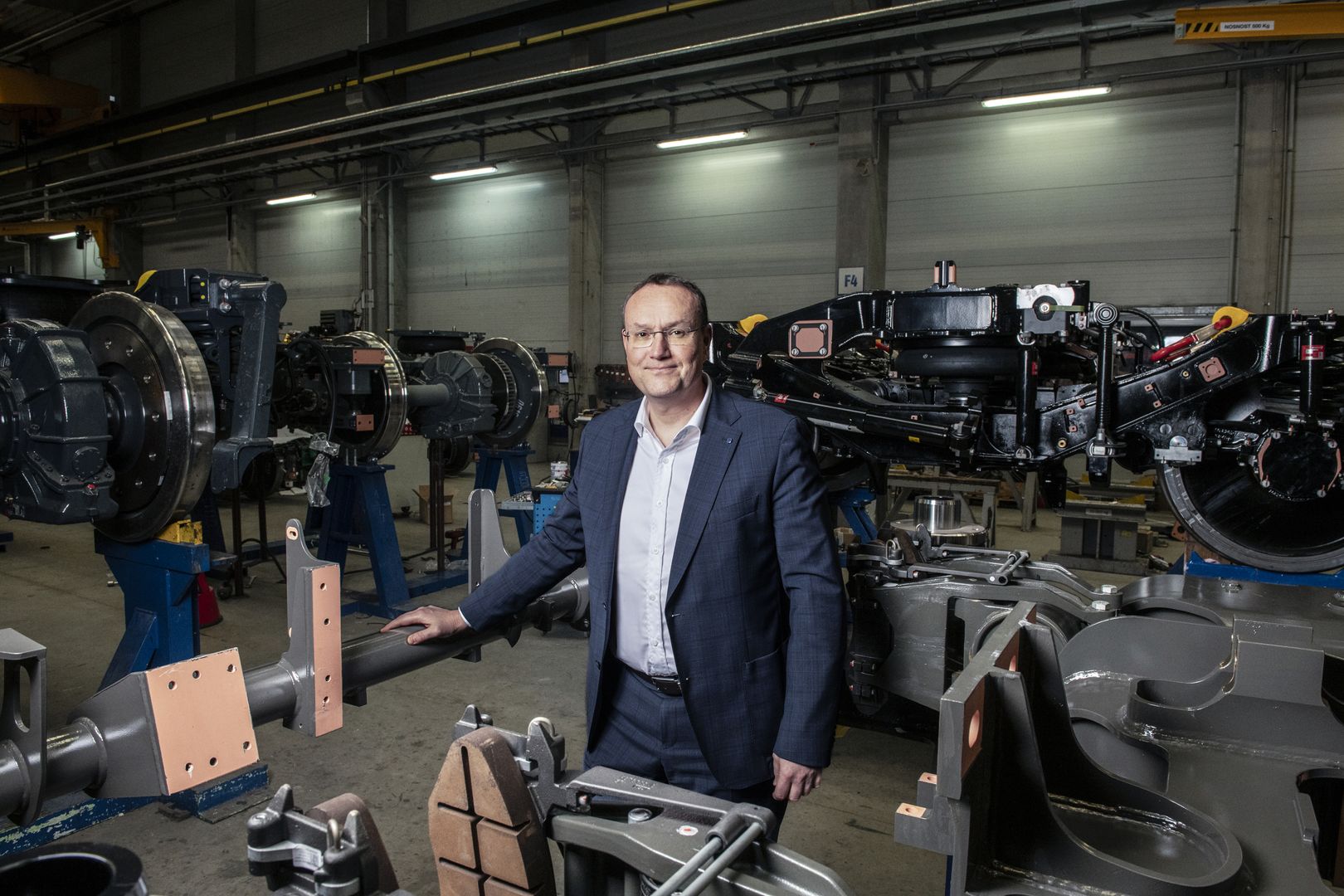
We bring you an interview given by CEO Petr Novotný to the Latvian agency Leta.lv in December 2025.
Latvia’s contract for the procurement of battery trains is quite large. How large is it for Škoda? How many battery trains have you produced so far?
Petr Novotný: Battery trains are currently our main product, and we believe they have a 15–25 year future because battery trains combine both a way to provide movement in places without electrified infrastructure and introduce more environmentally friendly energy into transport, allowing for the elimination of diesel engines in trains. For both of these reasons, they are a very effective solution, and we believe they will be a significant product for us in the coming years. Why? Because alternative solutions, such as using hydrogen in train engines, are not yet economically efficient enough to support mobility.
We believe there is also room for hybrid solutions. Our portfolio includes battery trains with diesel engine support. This is a product that expands the range in which battery trains can operate to more than 100 kilometers without electrified infrastructure, allowing them to reach more distant locations. This is how we are currently building our product portfolio, and we also see customer interest in the Czech Republic, Poland, and the Balkan states. Such solutions are definitely necessary for Central Europe because not all railway lines are electrified. For example, in the Czech Republic, only 30% of all railway lines are electrified.
In Latvia, concerns have been raised about how battery trains will operate in winter, when there may be periods of very low temperatures.
Petr Novotný: Such questions arise not only during periods of very low temperatures but also during extremely hot weather conditions.
It is guaranteed that the batteries will operate over a range of at least 100 kilometers even in such weather conditions.
Pavel Beránek, Project Director: We have performed calculations for the most critical conditions – a fully loaded train at minus 40 degrees Celsius, when the battery is already at the end of its life cycle. We are convinced that the batteries are durable enough to ensure train operation in any conditions.
Previously, there were delays with the delivery of the new electric trains. Do you anticipate that any problems could also arise with the delivery of BEMU (battery) trains, given that the war in Ukraine, which complicated logistics, is still ongoing?
Petr Novotný: One thing must be said here. Both supply chain disruptions and the war in Ukraine caught many manufacturers, not just Škoda, unprepared. There were delivery routes and supply chains that were completely disrupted and could not be used. However, over time, new routes and new ways of operating have been established. It was only a matter of time before we found new ways to react to external conditions.
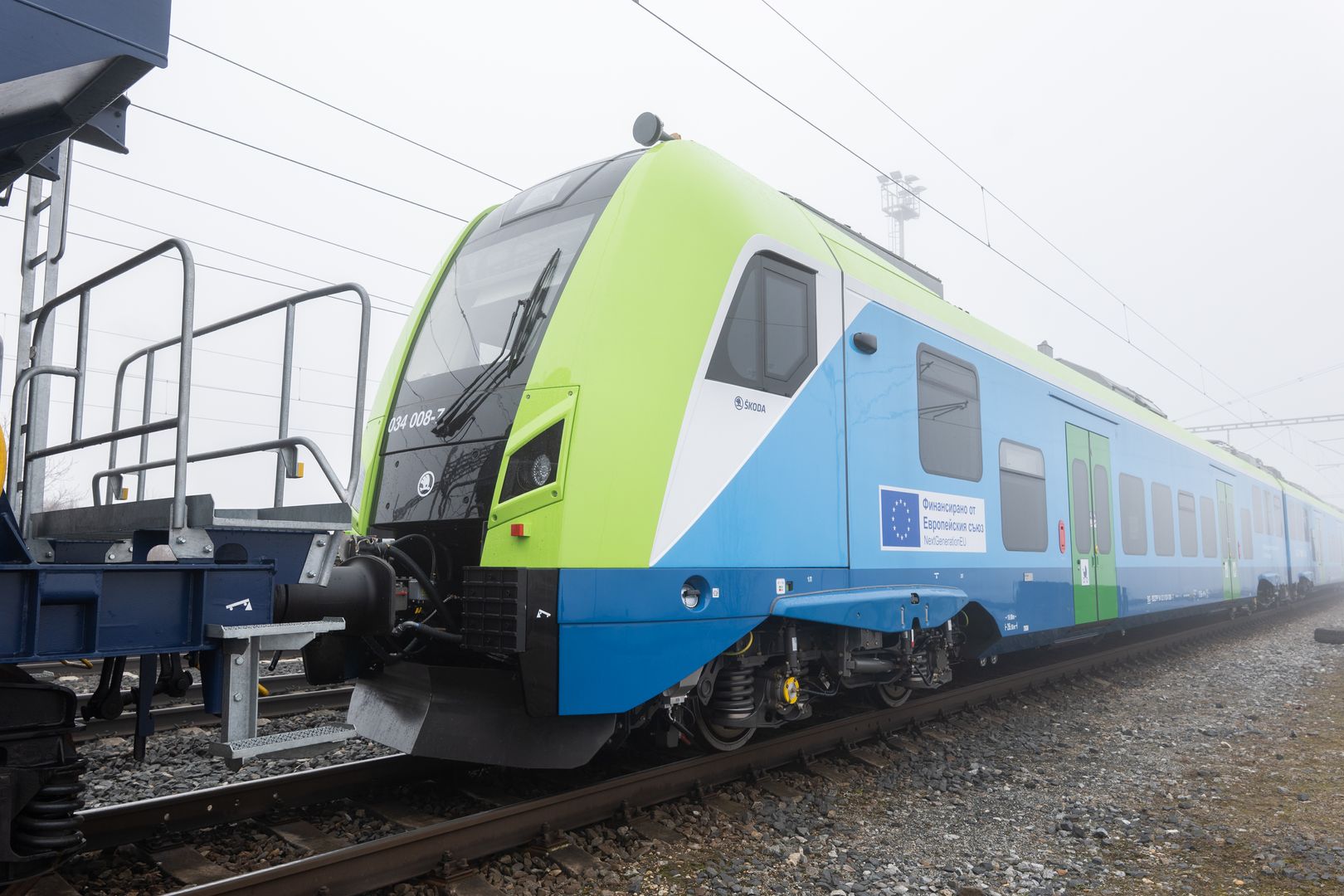
Of course, we do not know today what will happen in the future, but at present we have established a very reliable way to deliver our production. Therefore, under the current circumstances, we are very confident that our deliveries will be made on time. For example, last year we concluded a contract for 25 trains for the Bulgarian railway company, and we were able to deliver the first train in just 14 months. I believe the processes have stabilized and we can work according to the agreed schedule.
You already mentioned that you produce hybrid trains that operate on both battery and diesel engines. From a previous interview with the head of Pasažieru vilciens, we understood that the company would be very interested in this type of train. Does the currently concluded contract stipulate that you will only deliver battery trains to Latvia, or is the delivery of hybrid trains also possible?
Petr Novotný: This procurement for the purchase of nine trains, with seven additional trains as a future option, is for battery trains. The procurement specification is very clear. These are the same trains that we have already delivered and will deliver to the Czech railway company.
At the same time, I believe there is demand for hybrid trains in both Latvia and other countries because, on the one hand, they are an environmentally friendly solution, and on the other, they allow for longer distances. Furthermore, this technology enables the diesel engine to produce electricity for the batteries, meaning the batteries can be charged even on sections without charging infrastructure.
In the future, diesel engines can be replaced with better batteries that are much more powerful, or with hydrogen engines when they become more economically viable. These are opportunities that may arise in the coming decades.
Previously, Pasažieru vilciens stated that a decision on penalties for Škoda regarding delays in electric train deliveries could be made by the end of the year. Do you already know what the decision is?
Petr Novotný: Negotiations are ongoing, and I would not like to comment on them, as the teams handling this matter have much better information. We hope that both parties will reach a mutual agreement.
Initially, there were also many technical problems with the electric trains. What is the situation now?
Petr Novotný: I took office as Chairman of the Board exactly two years ago, and the main reason for the problems was the very tight delivery schedule for Latvia. It was a hard winter for us, and I can confirm that only thanks to the huge efforts of the teams on both sides were all issues truly resolved.
Several factors coincided at that time – a tight delivery schedule and a complicated geopolitical situation. I can truly thank the teams from both Pasažieru vilciens and Škoda who resolved everything. I also see that the number of people using trains is growing year after year, which shows that people like them.
Has the electric train that was damaged in a collision with a trolley (drezīna) been taken to the Czech Republic for repair as originally intended?
Pavel Beránek: There were discussions about where it would be more efficient to repair the train, and in the end it remained in Latvia. Our engineers are handling this matter and are developing a repair program for the train.
Petr Novotný: We are increasingly represented in the Baltic States. We are currently delivering new electric trains to Estonia, we will deliver almost 100 new buses to Vilnius, and we have won the Tallinn tender for the supply of trolleybuses.
There are similarities across the Baltic countries, including spare parts programs, so it is logical to consider establishing a maintenance and service center. I believe Latvia would be the right place for it. It would serve not only maintenance but also more extensive vehicle repairs, not only for trains. Important spare parts could also be stored there.
This center could also serve as a support point for operations in Finland. This is something I am actively considering and discussing with our owners so that we can best serve our fleet in the Baltic States. This would eliminate the need to transport vehicles back to the Czech Republic for repairs, as we would have sufficient staff, spare parts, and infrastructure locally. Our teams are already working on this.
When do you expect to make a decision on establishing such a center?
Petr Novotný: I believe it will happen next year.
And the location could be specifically in Latvia?
Petr Novotný: Distances in the Baltics are not that great, and we could bring a train from Estonia or a trolleybus from Lithuania to Latvia for repair. From my perspective, we have the largest vehicle fleet here.
We are also cooperating with L-Ekspresis, which already carries out modernization and repairs of rolling stock. Therefore, I believe Latvia is the right place. This is not only because we signed a contract here, but because infrastructure has been developed here for years. It is also important from a geopolitical point of view.
Latvia is often described as a leader in broken pantographs due to outdated railway infrastructure. Could this also cause problems for battery trains?
Pavel Beránek: This is something we truly take as a lesson learned from the operation of electric trains. Together with our client, Pasažieru vilciens, we are discussing improvements with the pantograph manufacturer to better adapt the equipment to the outdated contact network and increase durability. The same approach will be applied to battery trains.
Petr Novotný: They are more durable. Lessons have been learned, but it must also be said that Latvia needs to continue investing in infrastructure. These investments are being made, and it is good to see progress on both sides – we are strengthening the product, and there is also a clear direction toward improving infrastructure.
Estonia has also recently purchased Škoda trains. Has their introduction proceeded without major technical problems?
Petr Novotný: I believe there are no major problems. Commercial operations for the new trains have recently started. There are similarities between the trains in Latvia and Estonia, and experience gained here has certainly been applied.
It is always important to incorporate such lessons into product specifications and key components developed with suppliers. We therefore expect the implementation to go smoothly. I also hope there will be a similar effect as in Latvia – increased interest in train travel for daily commuting. Ultimately, the goal is to offer a more economical and environmentally friendly alternative to car travel.
The Rail Baltica project is being implemented across all Baltic States, and the announcement of the Rail Baltica train procurement is expected soon. Is Škoda considering participation?
Petr Novotný: Yes, possibly. First, I would like to mention that we concluded a contract with the international operator Arriva, based in London, which is active in the Netherlands, Great Britain, the Czech Republic, Romania, and Poland.
We signed a contract with them for high-speed trains operating at 200 km/h. So yes, we would like to be present. This also involves ensuring service excellence and developing assembly centers for components and sub-components, something we have already begun due to the conditions created by the war. This allows us to prepare for faster trains that will be needed.
Rail Baltica is also part of the Three Seas Initiative, which includes not only the Baltic States but also Poland, the Czech Republic, Austria, and others. How would you describe the competition in the Baltic region, and who are your biggest competitors?
Petr Novotný: Competition is necessary. It drives development and allows us to learn from one another. As Adam Smith once said, competition is the driver of progress. It ultimately benefits public transport users and end customers.
At the same time, we must realize that there are competitors much larger than Stadler and other European manufacturers, and many of them are outside Europe. These projects are extremely expensive. Each company – Siemens, Alstom, Stadler, PESA, or ourselves – invests around 90 million euros annually in research and development.
I believe in competition, but also in cooperation. In areas such as platforms, wheel systems, and major components like braking systems, collaboration makes sense. Certain parts of research and development can be shared.
This approach is common in the automotive industry. I worked for 14 years at the Swedish company Scania, where such cooperation exists. We already have projects like this with Siemens Mobility, for example a 230 km/h high-speed train development. It is already certified in many European countries and adaptable across regions.
Such cooperation allows us to share fixed costs and remain competitive against non-EU manufacturers. These projects are also supported by the European Commission and the European Investment Bank. This is important, especially considering the growing presence of China in global markets.
You supply public transport vehicles to Vilnius and Tallinn. Riga’s public transport company Rīgas satiksme has announced a market survey for the purchase of 100 trolleybuses and 24 trams. Could Škoda participate?
Petr Novotný: Yes, I believe so. We are currently the number one tram supplier in Germany, supplying more than 11 cities, with around 400 trams soon in operation. We are also present in Prague and are among the final bidders in a major procurement in Warsaw. We are competing in Helsinki and are very close to winning in Sofia.
This shows that we have a proven, high-quality product. In Riga, we are ready to compete with any bidder. In the tram segment, we have made significant progress in recent years, offering top-class products suitable for any city.
Regarding trolleybuses, we work in consortia with body manufacturers, and our solution is highly competitive. This segment is more standardized and suitable for many cities.
Modern trolleybuses no longer require continuous contact networks. Some can operate 20–50 kilometers on batteries alone. For example, in Prague we have delivered 24-meter trolleybuses with a capacity of over 200 passengers. They operate beyond the contact network, travel to the airport, return, and recharge while driving.
Cities can therefore choose between building new infrastructure or using trolleybuses capable of operating without overhead lines for certain sections. The advantage is that smaller batteries are sufficient, reducing dependence on battery suppliers and combining existing infrastructure with new technologies.
The Baltic States currently use the Russian standard track gauge, but Rail Baltica will introduce the European standard gauge. Talgo has developed trains capable of operating on both gauges. Do you see a need for such a solution?
Petr Novotný: The differences are not only in track gauge, but also in communication and safety systems. We work with the European Train Control System. We acquired a Belgian company that successfully certified this system, and we are currently working on certification in France, the Czech Republic, and Germany.
Soon, we will be able to fully rely on our own systems. Regarding track gauge, these are technical issues. Our portfolio already includes both standards, meaning fleets can be configured accordingly. We are among the few manufacturers capable of producing trains for both gauges.
So far, we have not considered variable gauge mechanisms, but if needed, we can adapt.
Pavel Beránek, This is mainly related to operational objectives. Rail Baltica will be a high-speed line built to European standards. Suburban electric or battery trains will not operate on it, and high-speed trains will not serve suburban networks. In my opinion, combining the two track gauges will not be relevant for the Rail Baltica project.
What role does the Baltic region play in your company’s development? Could it become one of your most important markets?
Petr Novotný: Yes, I believe so. Given our current presence and future plans, including the establishment of a service center and regional cooperation, the Baltics are one of our key strategic goals. I have presented this vision to our shareholders.
The region is also strategically important as a base for future reconstruction projects in Ukraine. It makes sense to build several regional centers rather than relying solely on production in the Czech Republic. We see one pillar in the Baltics, another in the Balkans, while maintaining the Czech Republic as our main center.
We must also remember that we operate in the critical infrastructure industry.