

Contact for media
Pavla Grabowski
Senior Communications Specialist • Marketing & Communications, Corporate communications
press@skodagroup.com
22. 9. 2026
Škoda Group Launches Production of New Trains for Arriva. First Car Body Already Painted
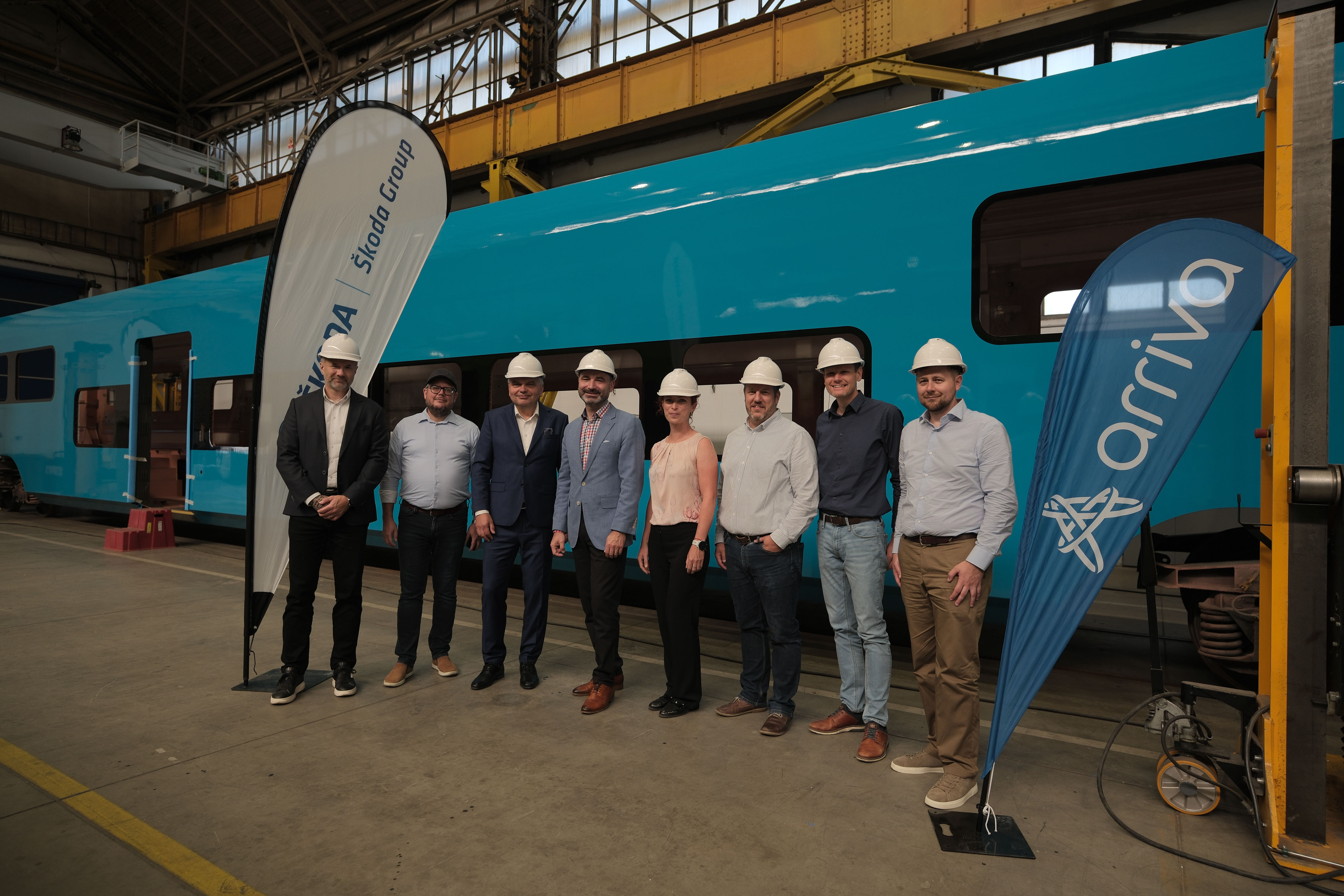
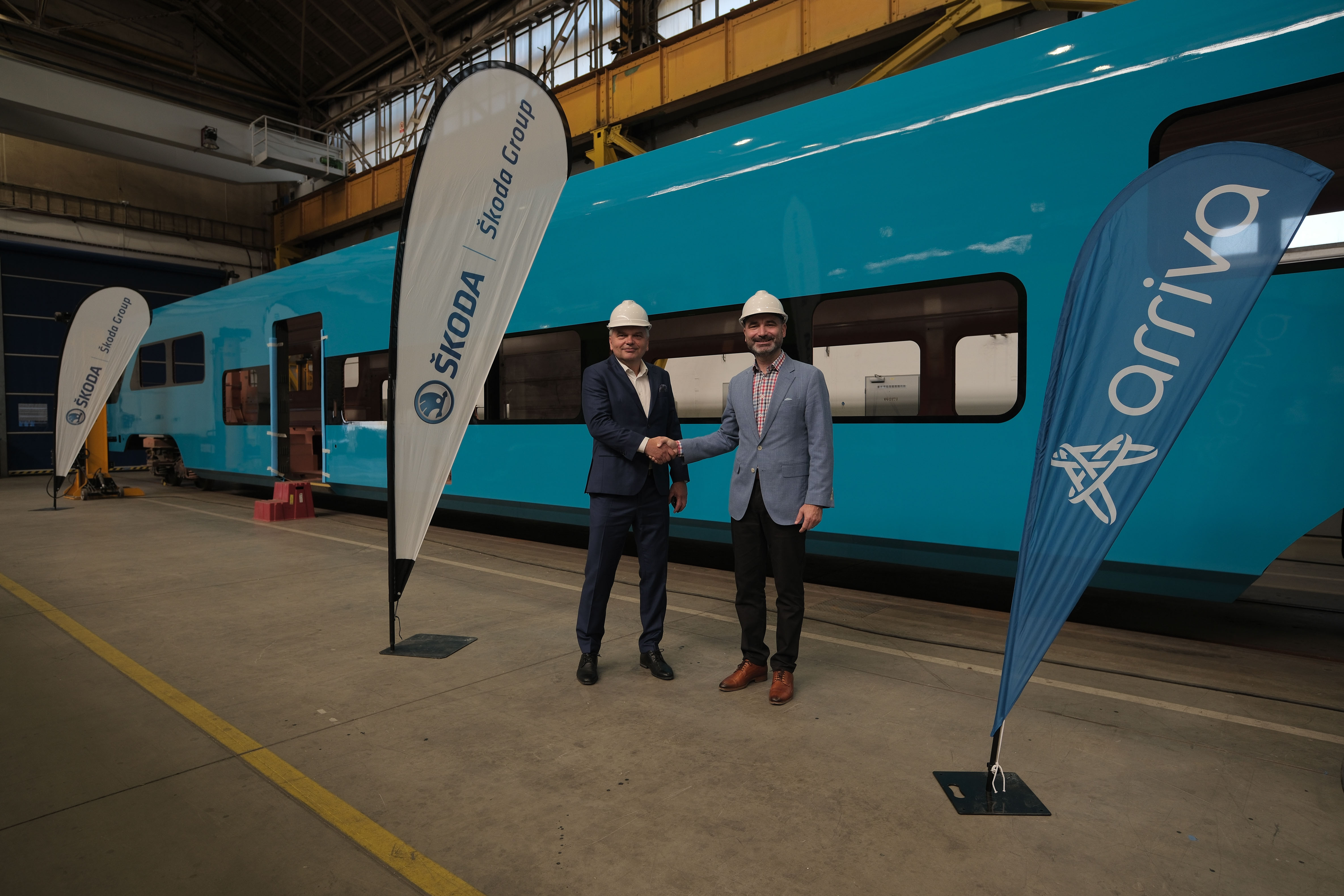
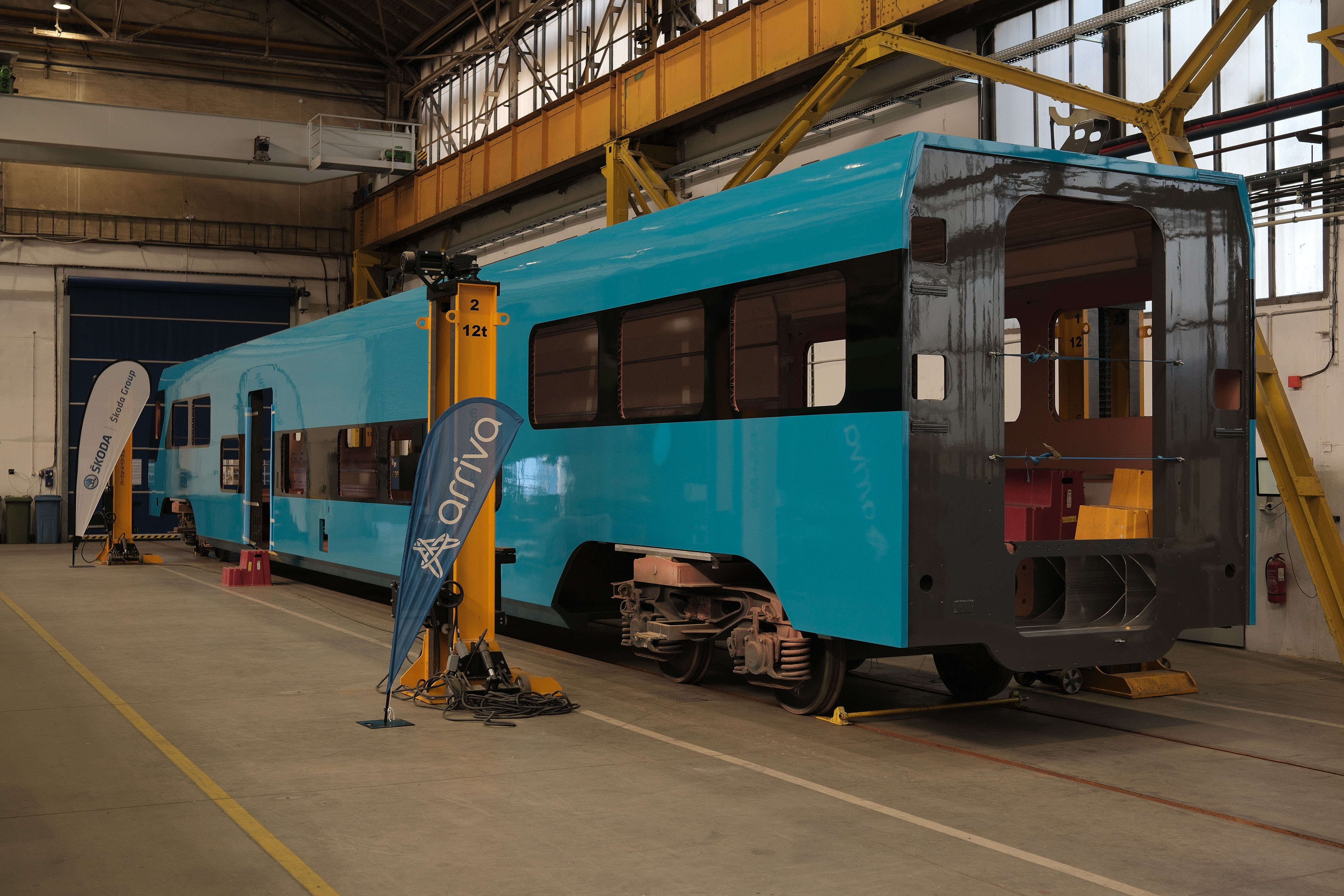
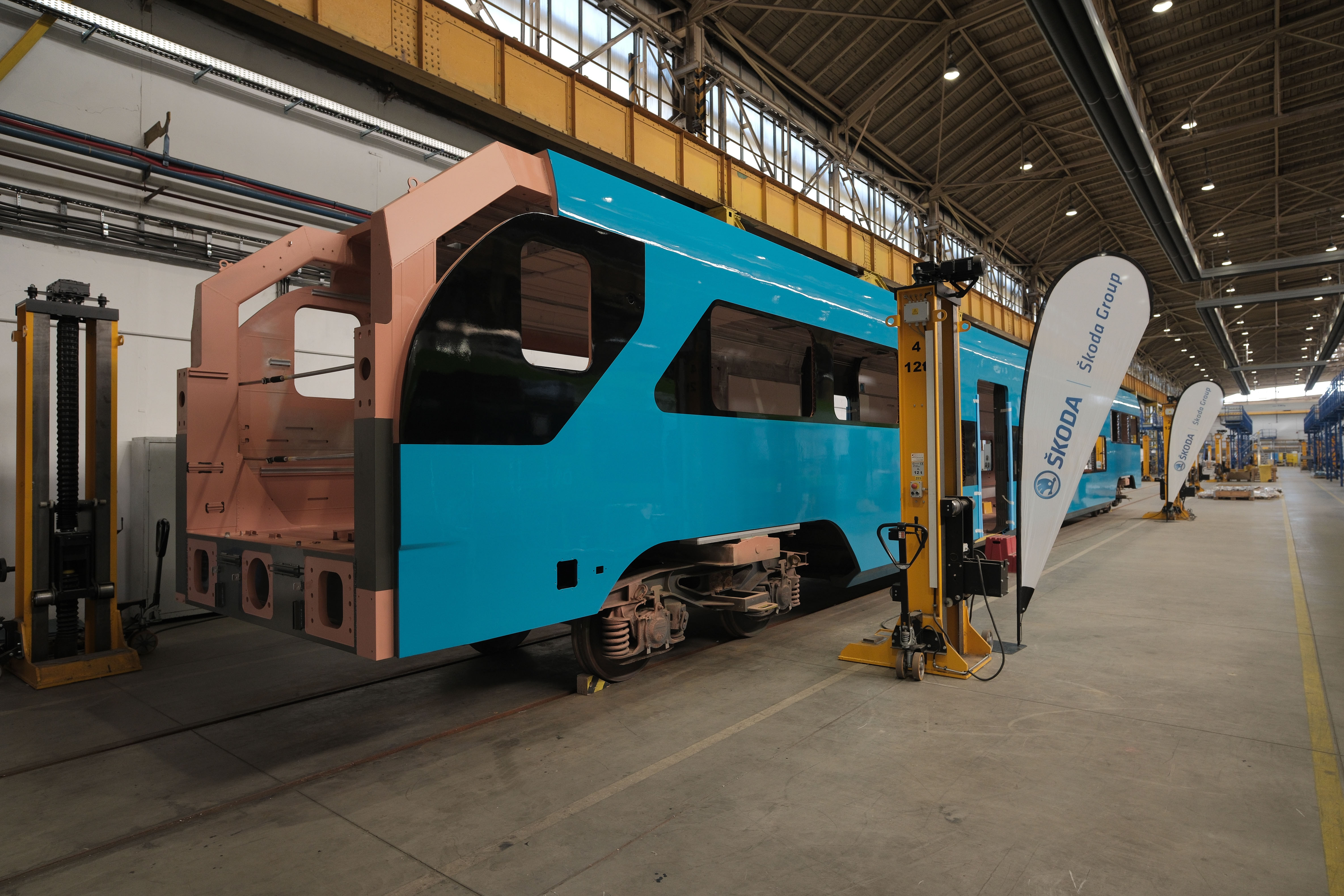
Ostrava, 9 September 2026 – Production of the new generation of electric multiple units for Arriva has reached another major milestone. Škoda Group has completed the design and technical preparation of the project and launched production of prototypes of both variants of the new train at its Ostrava plant. The first two car bodies have been completed in their basic welded form, and the first of them has already been painted. Assembly of the prototype vehicles will begin during September.
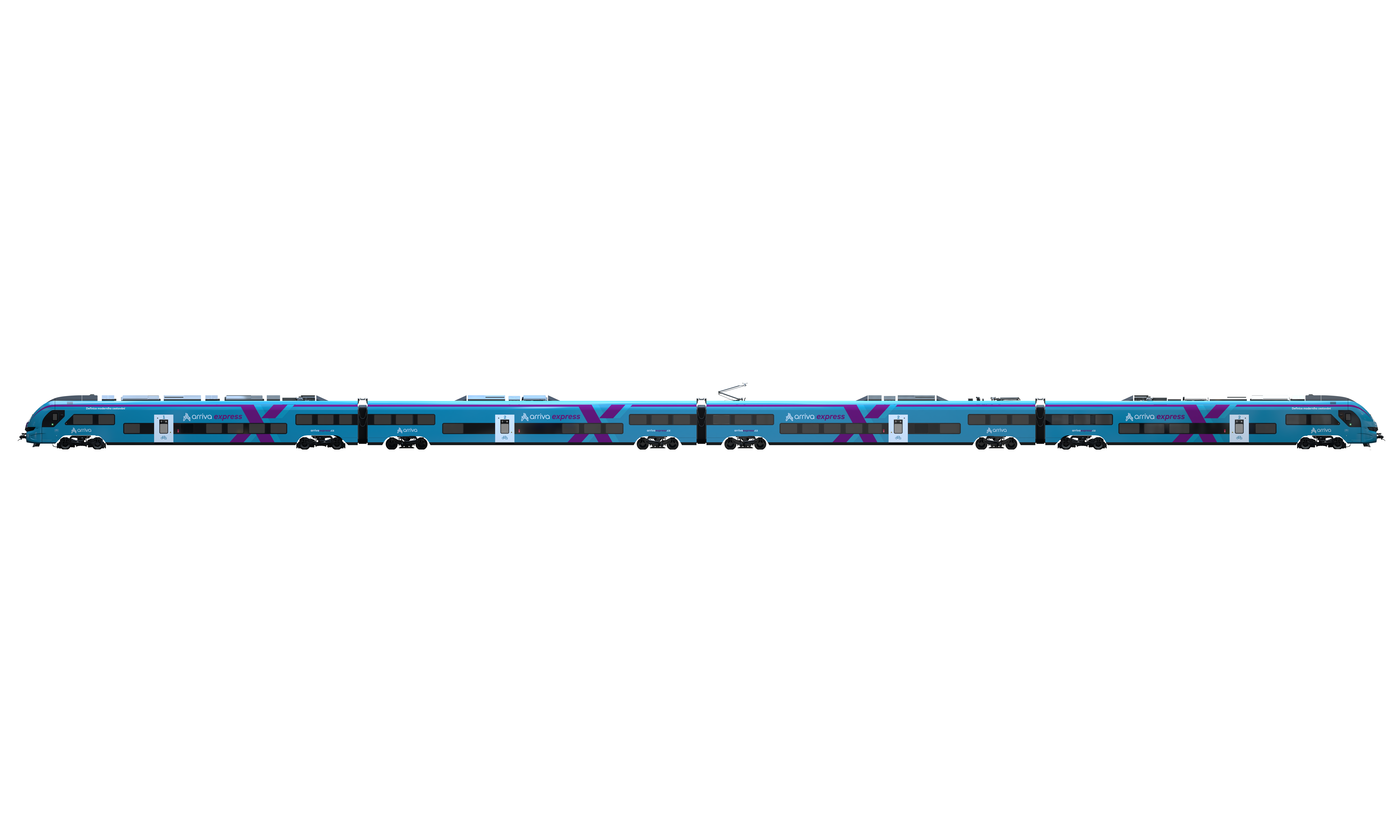
Škoda Group signed the contract with Arriva in July 2025. The contract, worth more than CZK 7 billion, covers the production of at least 22 low-floor electric multiple units from the new Škoda 26Ev platform – 16 three-car and 6 four-car units. With a maximum speed of 200 km/h, the trains are scheduled to enter service from December 2028 on the Ex6 Prague–Pilsen–Cheb and R16 Prague–Beroun–Pilsen–Klatovy / Železná Ruda routes.
“Since signing the contract, we have completed the design and technical preparation of the project and moved on to production of the first vehicles. The first painted car body is an important and, above all, highly visible milestone. At the same time, we are continuing to test key components and prepare the traction and control system. The project is therefore gradually moving from the development phase into physical production,” says Tomáš Ignačák, Vice Chairman of the Board of Škoda Group, adding: “I would also like to highlight the significant role that Czech industry will play in the production of these new trains. We expect domestic suppliers to account for approximately 80% of deliveries.”
Prototypes are being built in Ostrava
The Ostrava plant is currently producing prototypes of both unit variants, referred to in the project as EMU200 and EMU300. The basic welded structures of the first two car bodies have been completed, with additional car bodies expected to leave the production line at approximately two-week intervals. Prototype assembly will begin during September, with bogies, traction equipment, control systems, interiors and other equipment to be installed progressively.
“It is great to see the train, which until now we have known mainly from technical drawings and visualisations, turning into a real vehicle. The new units will offer passengers higher speeds, a comfortable interior and modern onboard services. Today’s presentation of the new car bodies brings us closer to deploying them on routes from Prague via Pilsen to Cheb and Klatovy,” adds Daniel Adamka, CEO of ARRIVA CZ.
Component testing is already under way
In parallel with prototype production, type tests of individual components are under way to verify compliance with the required technical and safety parameters. In cooperation with the RICE research centre at the Faculty of Electrical Engineering of the University of West Bohemia in Pilsen, Škoda Group is beginning testing of the traction system. Development and verification of the vehicle software will take place at Škoda Digital.
Testing of the complete prototype trainsets is scheduled to begin in spring 2027. This will be followed by the tests required for approval of the new vehicle type and preparations for series production.
A new platform for long-distance transport
The units for Arriva are based on the Škoda 26Ev platform designed for interregional and long-distance transport. They will be dual-system units, capable of operating on lines electrified at 3 kV DC and 25 kV AC, while they can also be modified for operation on 15 kV AC systems, for example in Germany. The maximum operating speed will be 200 km/h. The trains will meet stringent requirements for passenger comfort, pressure tightness and fire safety, enabling them to operate on high-speed lines and in tunnel sections longer than 5 km.
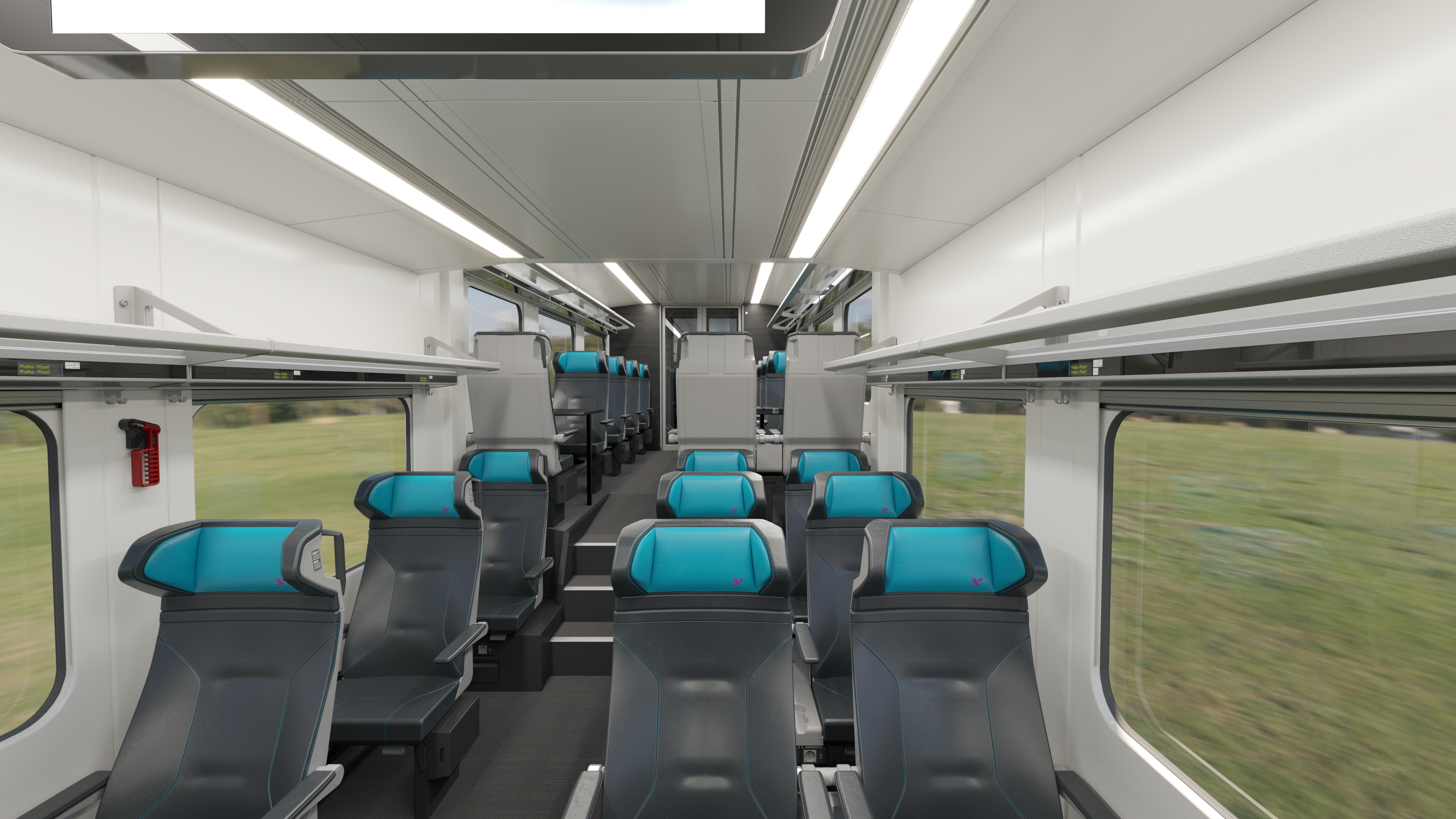
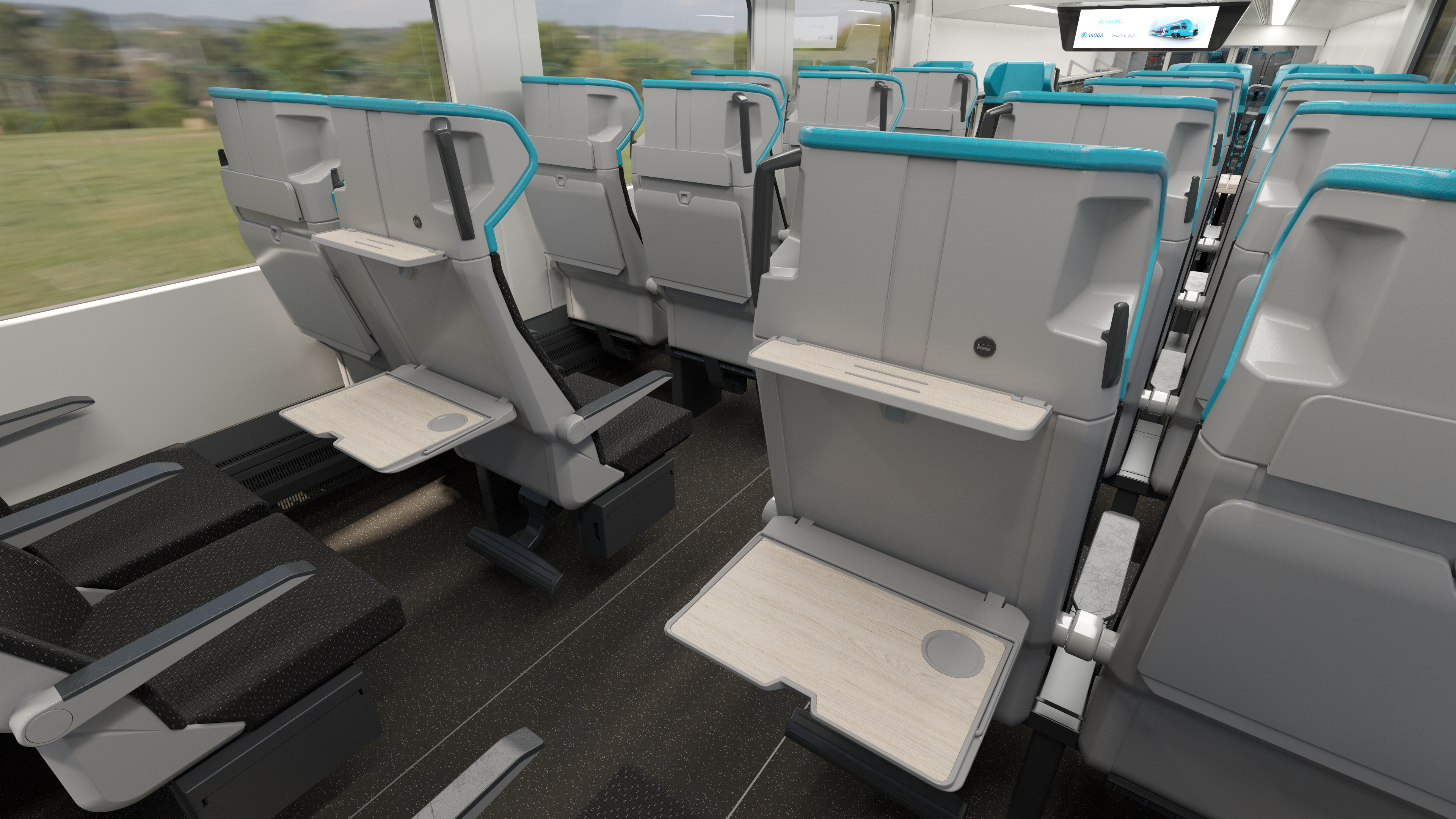
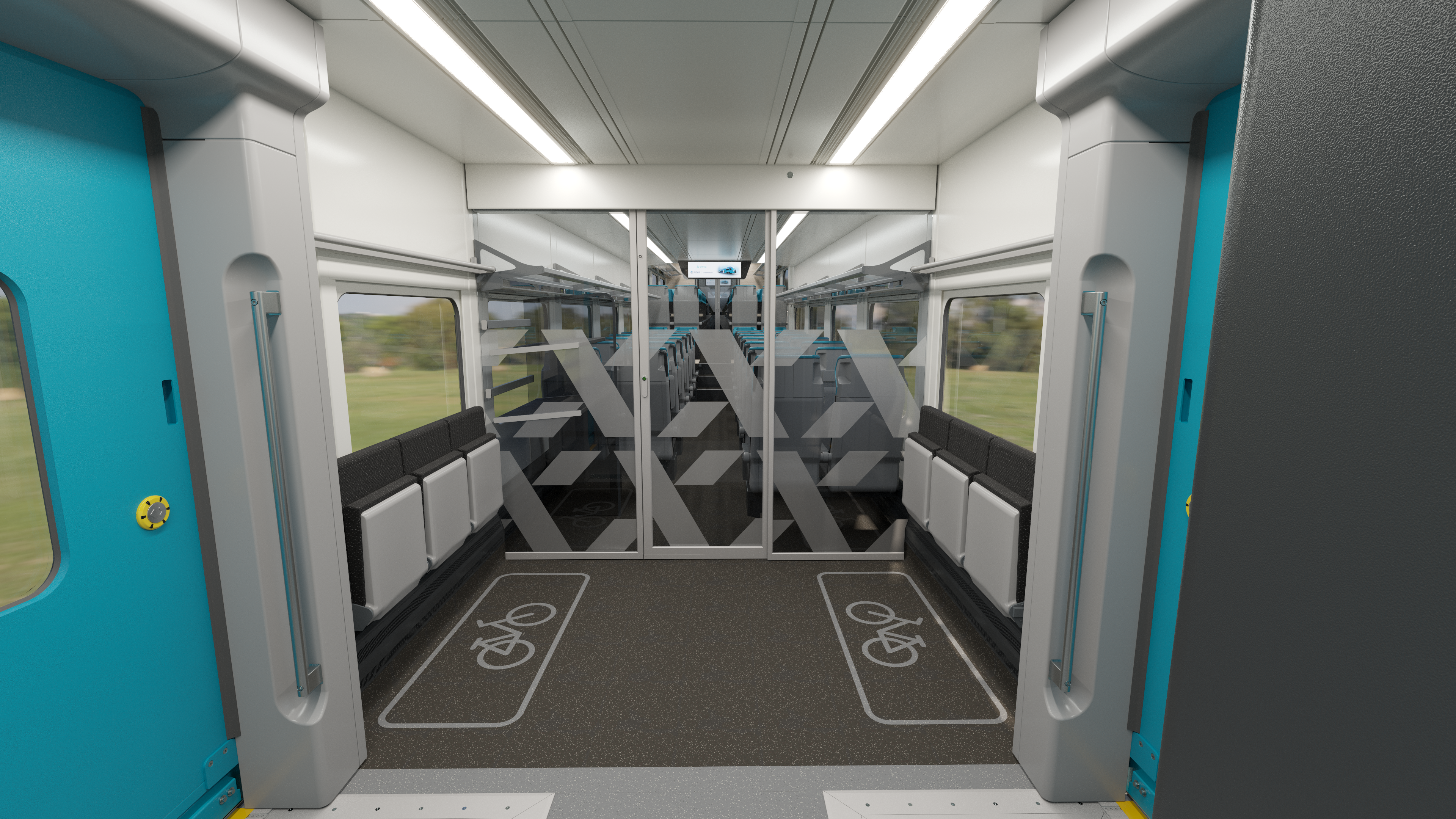
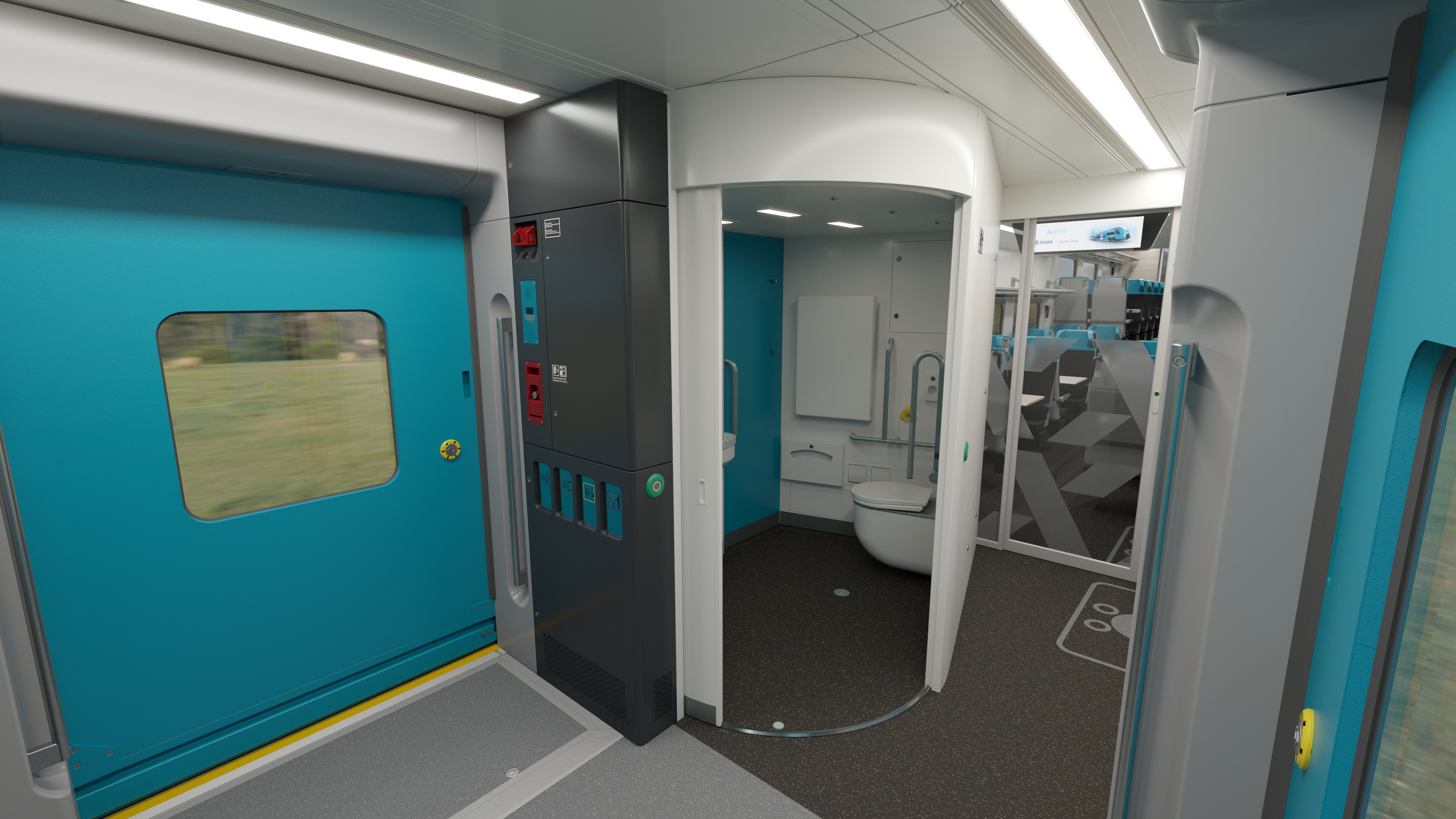
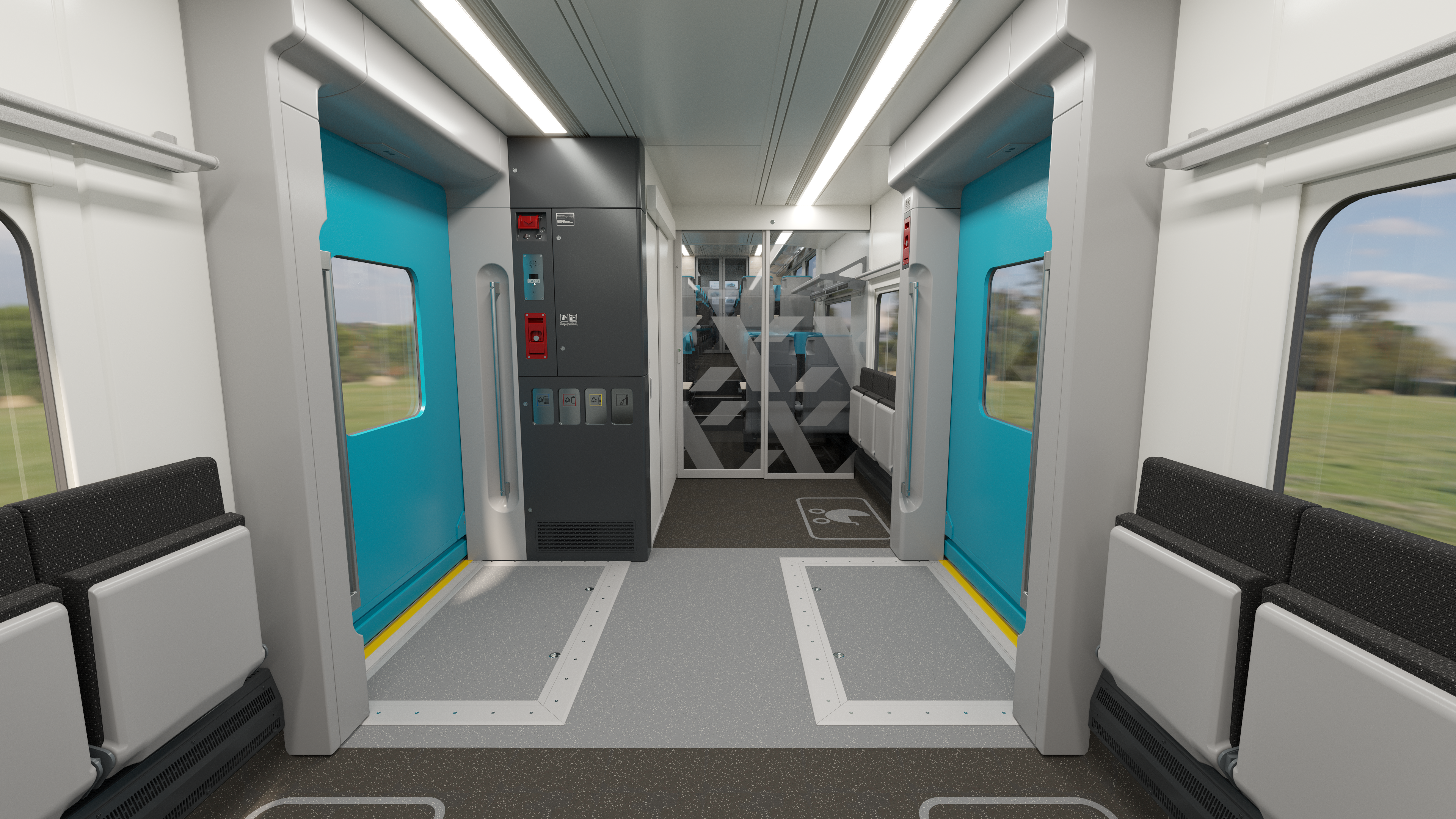
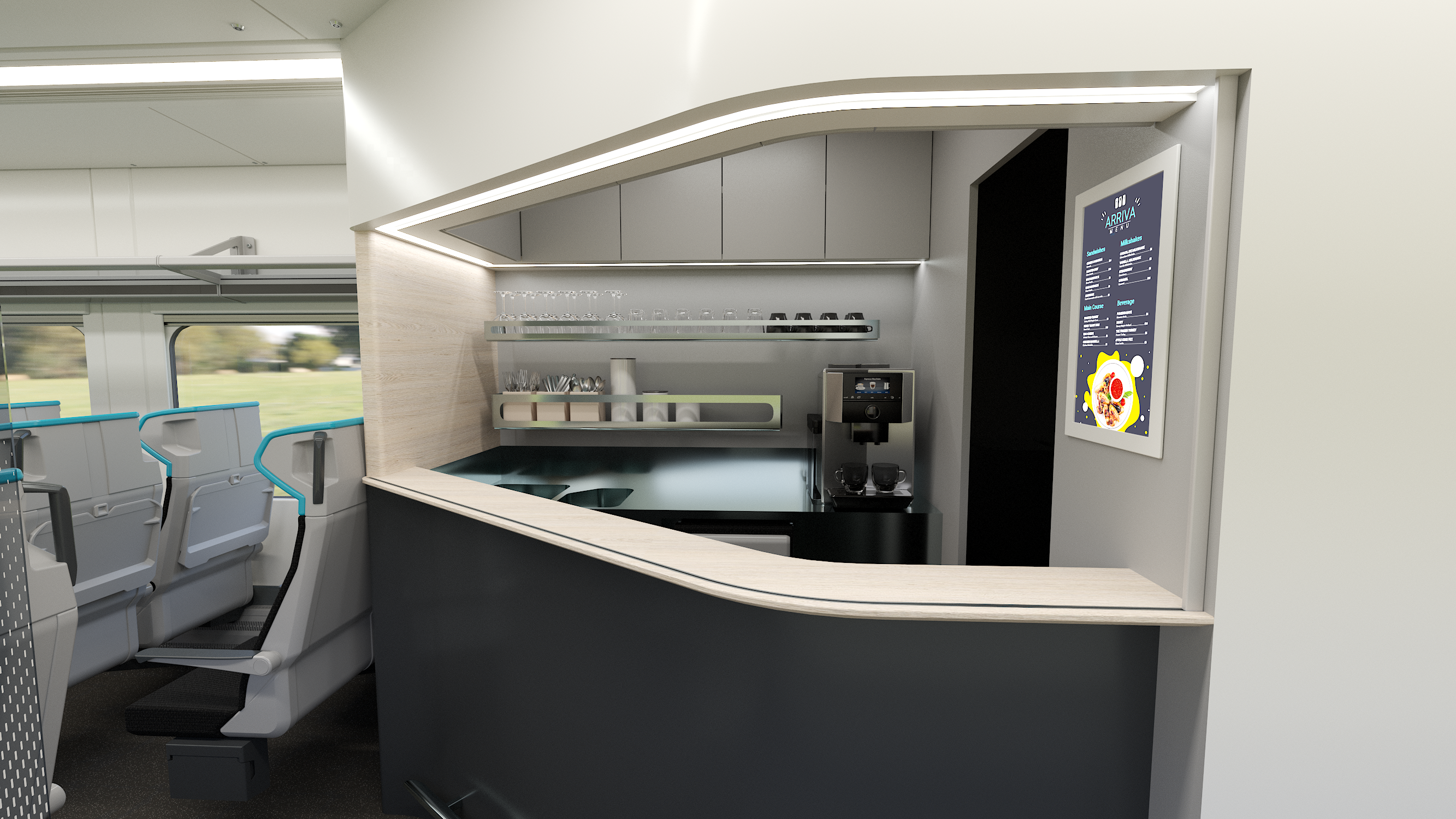
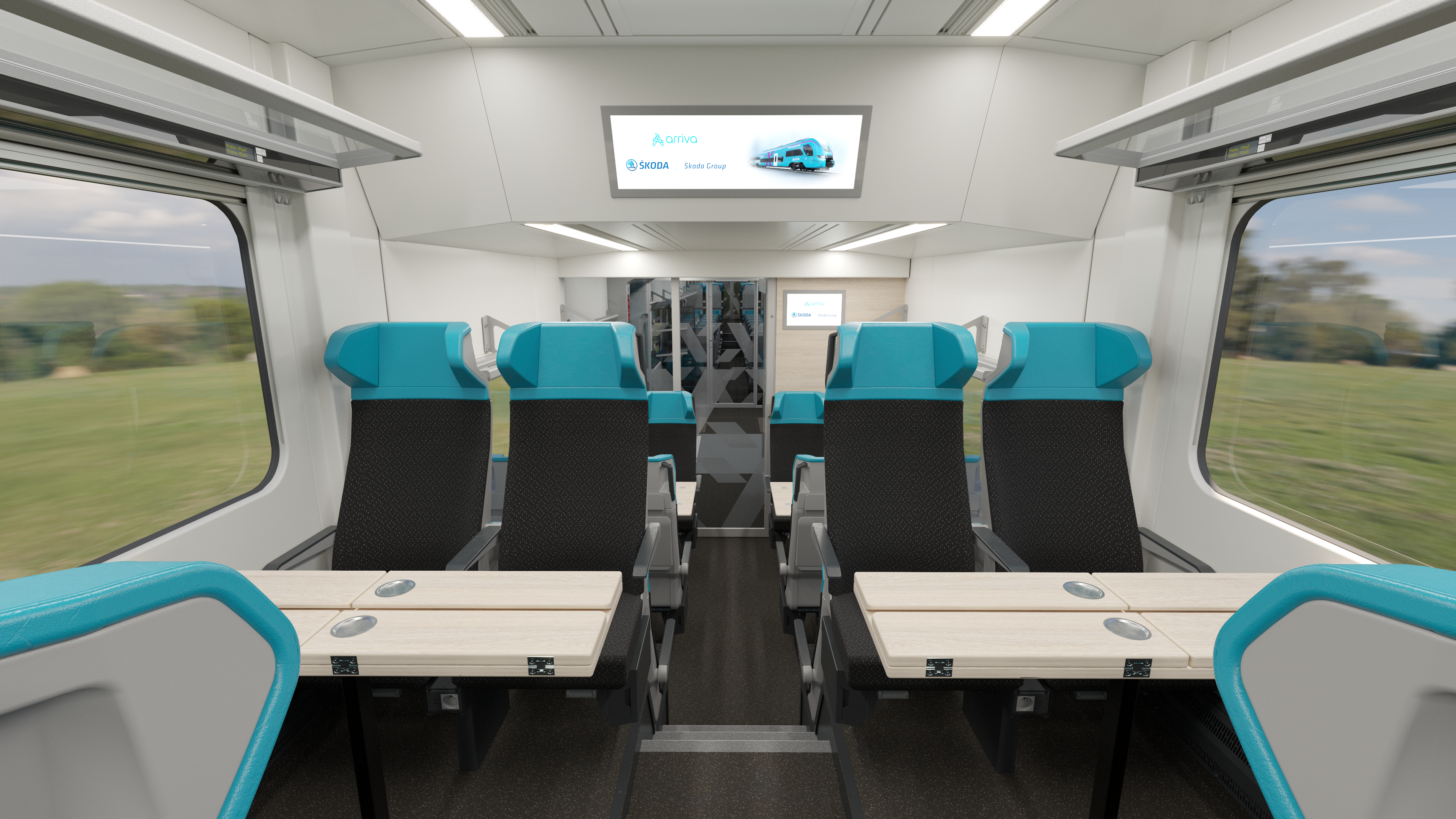
The three-car units will offer 224 seats, while the four-car units will provide 315 seats. Both variants will also include first class. Equipment will include air conditioning, Wi-Fi connectivity, power sockets, passenger information and CCTV systems, and an accessible toilet. The trains will also be equipped with the European Train Control System (ETCS), remote vehicle diagnostics technology and an Automatic Train Operation (ATO) system, which enables the units to operate in the most energy-efficient mode available at any given time. It regulates speed according to the timetable and the line gradient profile and optimises braking. Based on real-world operating data from comparable Škoda units in the Baltics, the system can reduce energy consumption by up to 15%.
Gallery
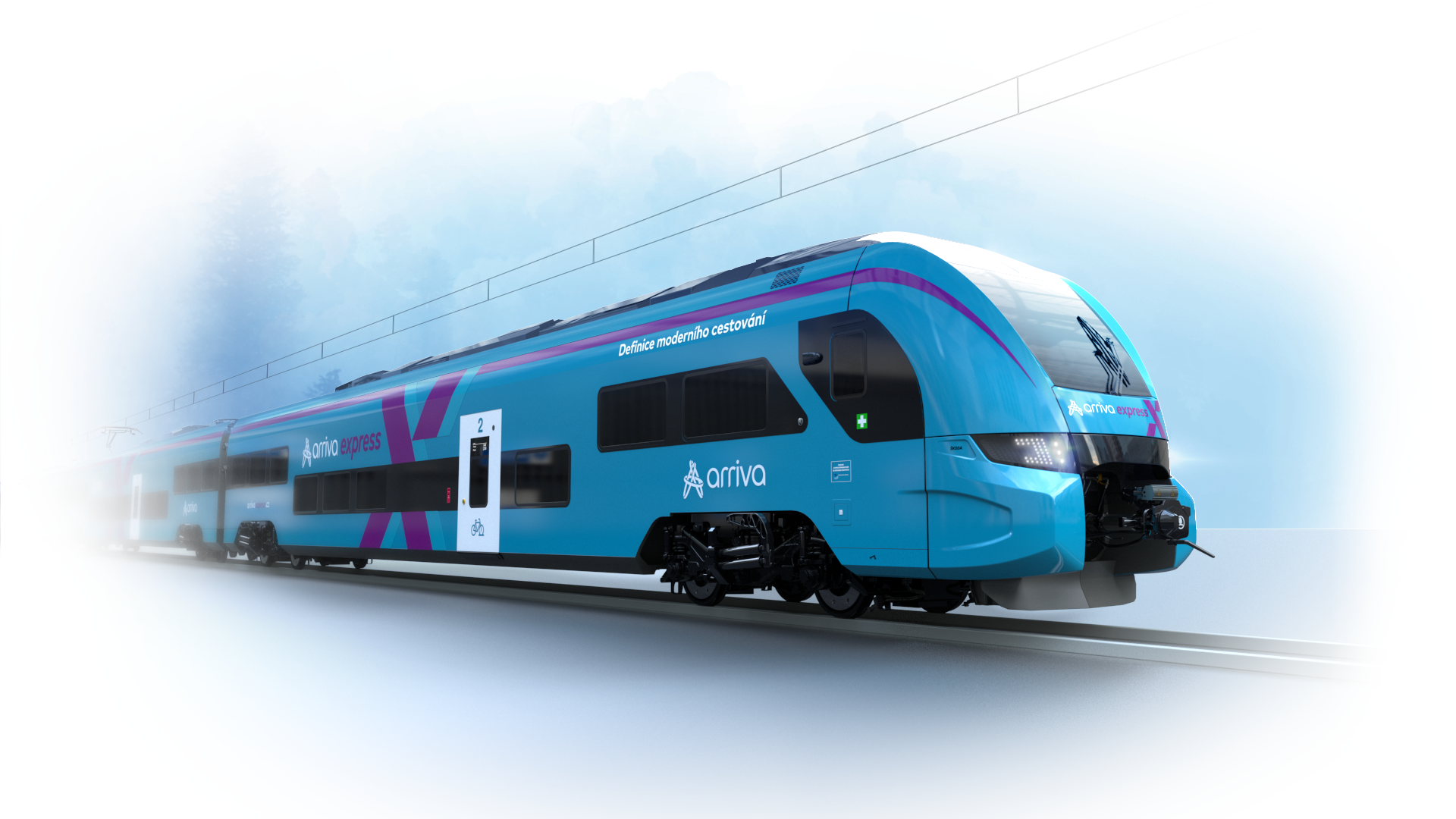
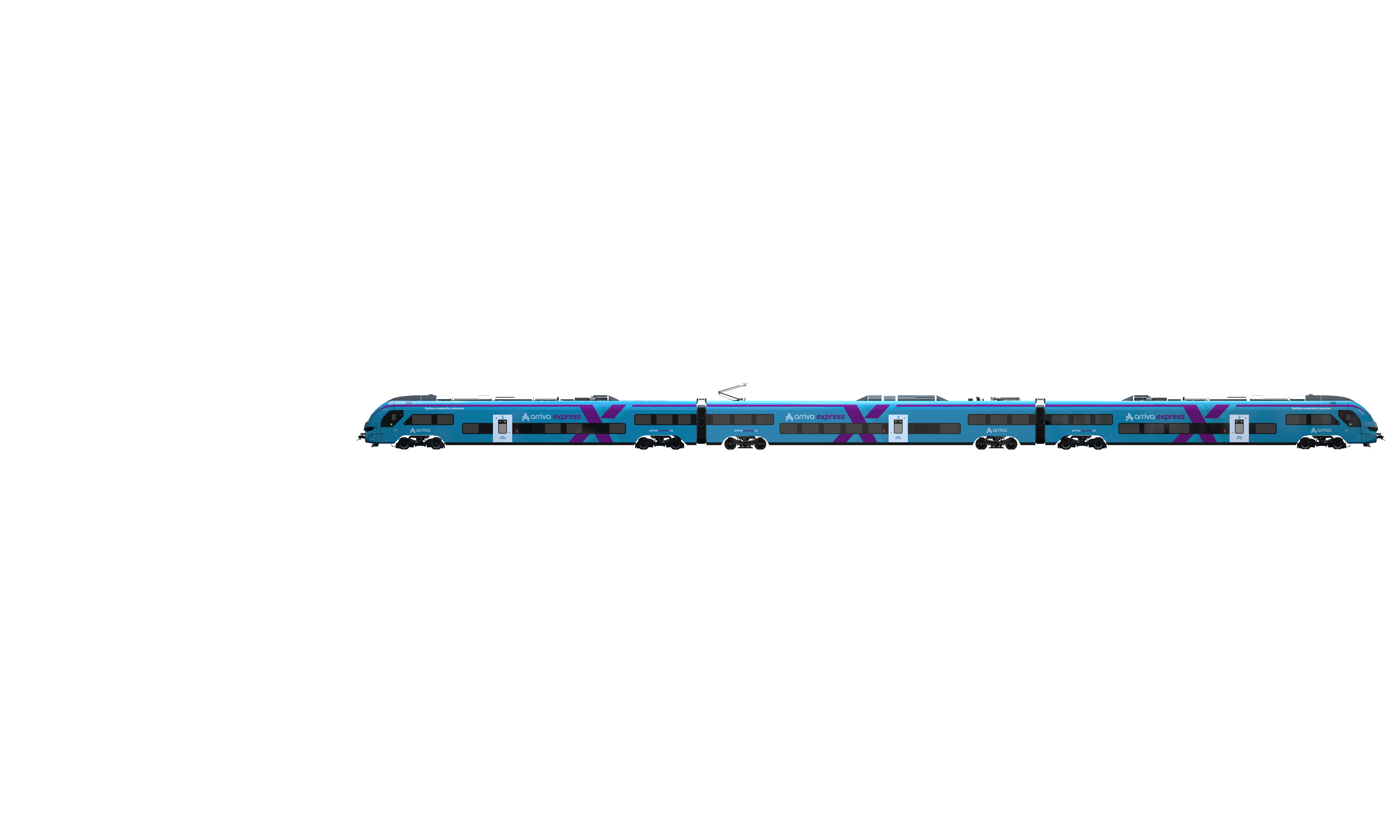
Vizualizace exteriéru
Vizualizace interiéru