

Contact for media

9. 6. 2026
Škoda Group introduced the Next Generation RegioPanter Battery Train in Ostrava
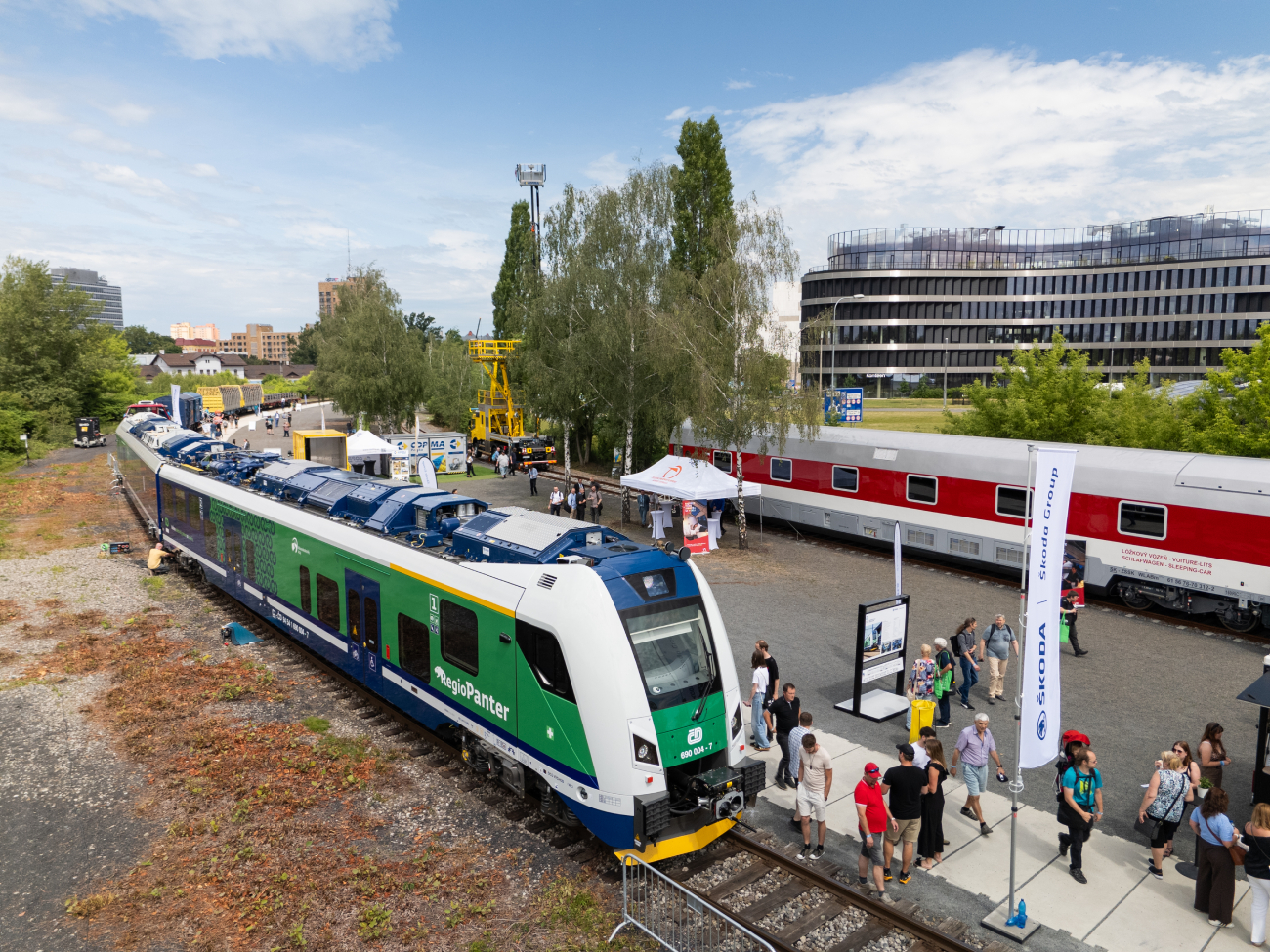
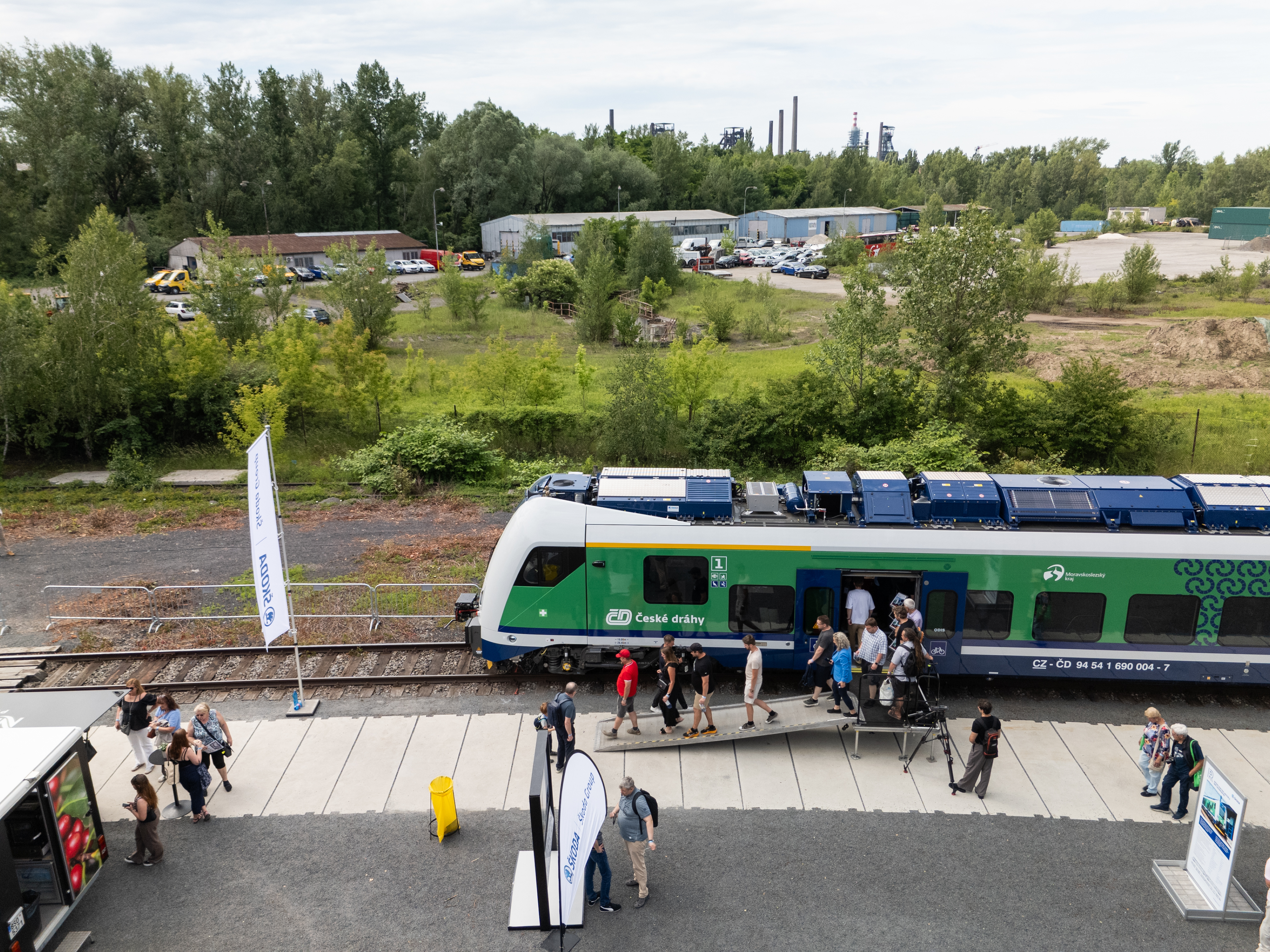
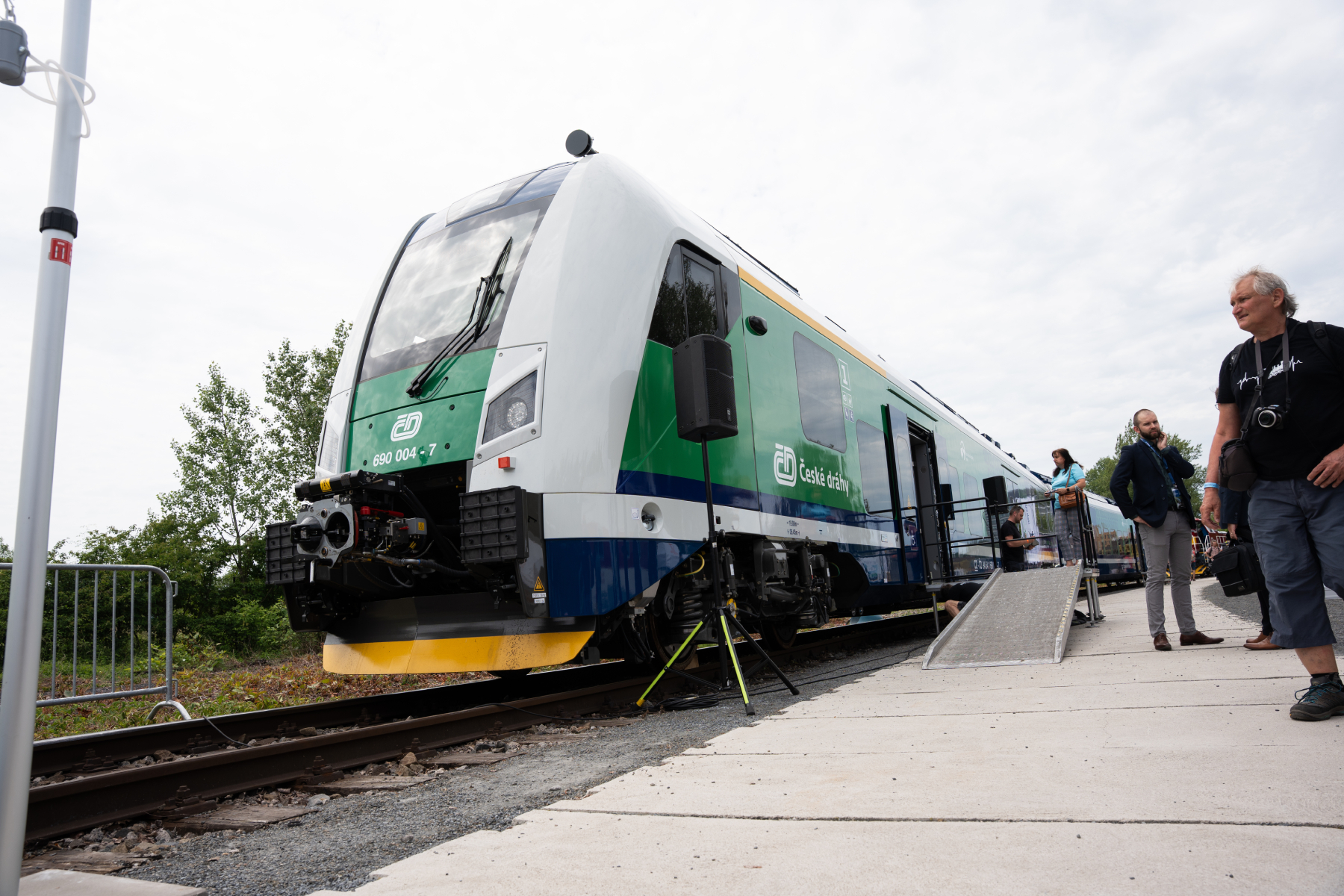
Škoda Group, a leading European manufacturer of modern and emission-free public transport solutions headquartered in the Czech Republic, unveiled the next generation RegioPanter battery train (BEMU) at the international Rail Business Days 2026 trade fair held at Trojhalí Karolina in Ostrava. The modern train is designed primarily for regions with partially electrified railway infrastructure and enables the rapid introduction of comfortable, quiet and emission-free operations even on lines without overhead electrification.
Škoda Group is currently manufacturing 15 of these trains for České dráhy and operation in the Moravian-Silesian Region. At the same time, the technology also has strong export potential. Škoda Group has already secured its first foreign orders for up to 16 battery trains for Latvia and up to 36 trains for Slovakia. Together with an order for up to 34 battery trains equipped with a diesel generator for RegioJet, more than 100 battery-powered trains from Škoda Group are currently in various stages of production or order, positioning the company among Europe’s most successful suppliers of battery-powered rolling stock.
The next generation RegioPanter battery trains combine electric and battery propulsion. While running under overhead lines, the batteries are continuously recharged, and on non-electrified sections the train uses energy stored in the batteries. The train offers a range of 80 kilometres in battery mode, a maximum speed of 160 km/h under overhead lines, and 120 km/h in pure battery mode. Thanks to regenerative braking, the batteries are also recharged during braking, including on non-electrified sections.
“Our new battery trains demonstrate that emission-free regional transport does not have to wait for complete railway electrification. They provide operators and transport authorities with a rapidly deployable solution that enables non-electrified local lines to be connected directly with major electrified corridors without transfers. Passengers benefit from faster, more comfortable and quieter travel, while regions gain a modern transport backbone with significantly lower emissions,” said Tomáš Ignačák, Vice Chairman of the Board of Škoda Group.
“We see the fifteen next generation RegioPanter battery trains as another important step towards the development of modern and emission-free regional transport in the Moravian-Silesian Region. The first four battery trains have already confirmed that this is the right direction. Since entering service at the end of 2024, they have travelled more than one million kilometres and provided passengers with convenient direct connections without transfers, even on lines that are not fully electrified. Their environmental benefits are also very positive, contributing approximately 40% lower CO₂ emissions compared to vehicles with combustion engines. Passengers also appreciate the comfort of modern air-conditioned trains, which can take them directly, for example, to the Moravian-Silesian Beskids,” said Jiří Ješeta, Member of the Board and Deputy CEO of České dráhy for Passenger Transport.
“Our goal is to offer modern, reliable, and eco-friendly transportation that will serve as a genuine alternative to private car travel. We would like to thank all our partners who are contributing to this effort,” said Radek Podstawka, Deputy for Transportation of the Moravian-Silesian Region.
A Fully-Fledged Battery Train Designed from the Ground Up
The next generation RegioPanter battery trains represent a major technological shift compared to the first battery trains introduced into service in the Moravian-Silesian Region in December 2024. While the previous generation was based on an electric multiple unit supplemented with battery propulsion, the new generation was designed from the outset as a fully-fledged battery train. This is reflected, for example, in the new arrangement of battery blocks on the roof, the optimised traction system, and the overall more efficient vehicle design.
The train uses LTO (lithium-titanate) batteries, which offer a higher level of fire safety, longer service life, and high performance. Compared to the previous generation, the new technical solution reduces weight and, thanks to overall optimisation of the traction system, including the use of SiC (silicon carbide) converters, delivers comparable performance in battery mode to operation under overhead lines while significantly reducing energy consumption.
The new generation also offers higher passenger capacity. The trainset provides 150 seats, meeting the needs of regional lines with growing demand for modern rail transport. At the same time, the design modifications maintain a high level of passenger comfort and standards corresponding to current requirements for regional railway transport.
Faster Regional Connections without Transfers
A major advantage of battery trains is their ability to connect non-electrified regional lines with electrified main lines and corridors. In practice, this means that the train can operate on battery power on the initial non-electrified section and then continue at higher speed under overhead lines once connected to an electrified route. The maximum speed of 160 km/h in electric mode therefore significantly shortens travel times between smaller towns, regions, and major regional centres.
Concrete benefits are already visible in the operation of the first BEMU units in the Moravian-Silesian Region. Direct services from the areas of Veřovice, Štramberk, Kopřivnice and Příbor via Studénka to Ostrava combine battery operation on the non-electrified part of the route with subsequent operation under overhead lines on the main corridor. As a result, passengers gain faster direct connections without the need to transfer, making public transport a more attractive alternative to individual car travel.
Battery trains in the Moravian-Silesian Region have already surpassed one million kilometres in operation and continue to confirm their contribution to environmentally friendly transport. Compared to diesel multiple units, they reduce CO₂ emissions by approximately 40%, with regenerative braking providing a significant share of the savings. In May 2026, the trains also successfully completed the final verification tests for the line to Budišov nad Budišovkou ahead of the launch of new battery train operations. With the second summer season approaching, further passenger growth is expected, as travellers can journey directly and in fully air-conditioned comfort, for example, all the way to the Moravian-Silesian Beskids.
A Solution for Regions in the Czech Republic and Across Europe
The next generation RegioPanter battery trains build on the successful operation of the first four trains in the Moravian-Silesian Region. These entered service in December 2024 and within the first months of operation demonstrated that the catenary-battery concept can quickly bring the comfort of electric trains even to lines without overhead electrification. The deployment of BEMU units results in annual savings of at least 200,000 litres of diesel fuel and approximately 500 tonnes of CO₂ emissions.
“Our experience from the Moravian-Silesian Region is extremely important for us. It shows that battery trains are not merely a technological innovation, but a practical solution for everyday operations. The new generation goes even further – it is lighter, more energy-efficient, more powerful, and designed from the outset for combined battery and overhead line operation. We see significant potential here for other regions in the Czech Republic and abroad to make rail transport more attractive, cleaner and more comfortable in a very short time,” added Ivo Gurňák, Chief Commercial Officer for Trains at Škoda Group.
Summary of Key Technical Parameters and Improvements of the Next Generation BEMU RegioPanter Units
Propulsion concept: Combination of electric propulsion from overhead lines and battery propulsion
Purpose: Regional transport on partially electrified lines
Range in battery mode: 80 km
Maximum speed under overhead lines: 160 km/h
Maximum speed in battery mode: 120 km/h
Continuous power output: 1,360 kW
Capacity: 150 seats
Batteries: LTO batteries
Traction system: Optimised traction system with SiC converters
Weight: Lower than the previous generation by several tonnes
Energy consumption: Significantly lower than the previous generation
Regenerative braking: Battery charging during braking, including outside electrified sections
Battery safety and lifespan: LTO technology provides higher fire safety, longer lifespan, and higher performance compared to alternative railway battery technologies
Main operational benefit: Direct connection of non-electrified regional lines with electrified corridors without transfers
Gallery