

Contact for media
Pavla Grabowski
Senior Communications Specialist • Marketing & Communications, Corporate communications
press@skodagroup.com
2. 10. 2026
Škoda battery trains make their InnoTrans debut. A European bestseller shows the future of regional rail
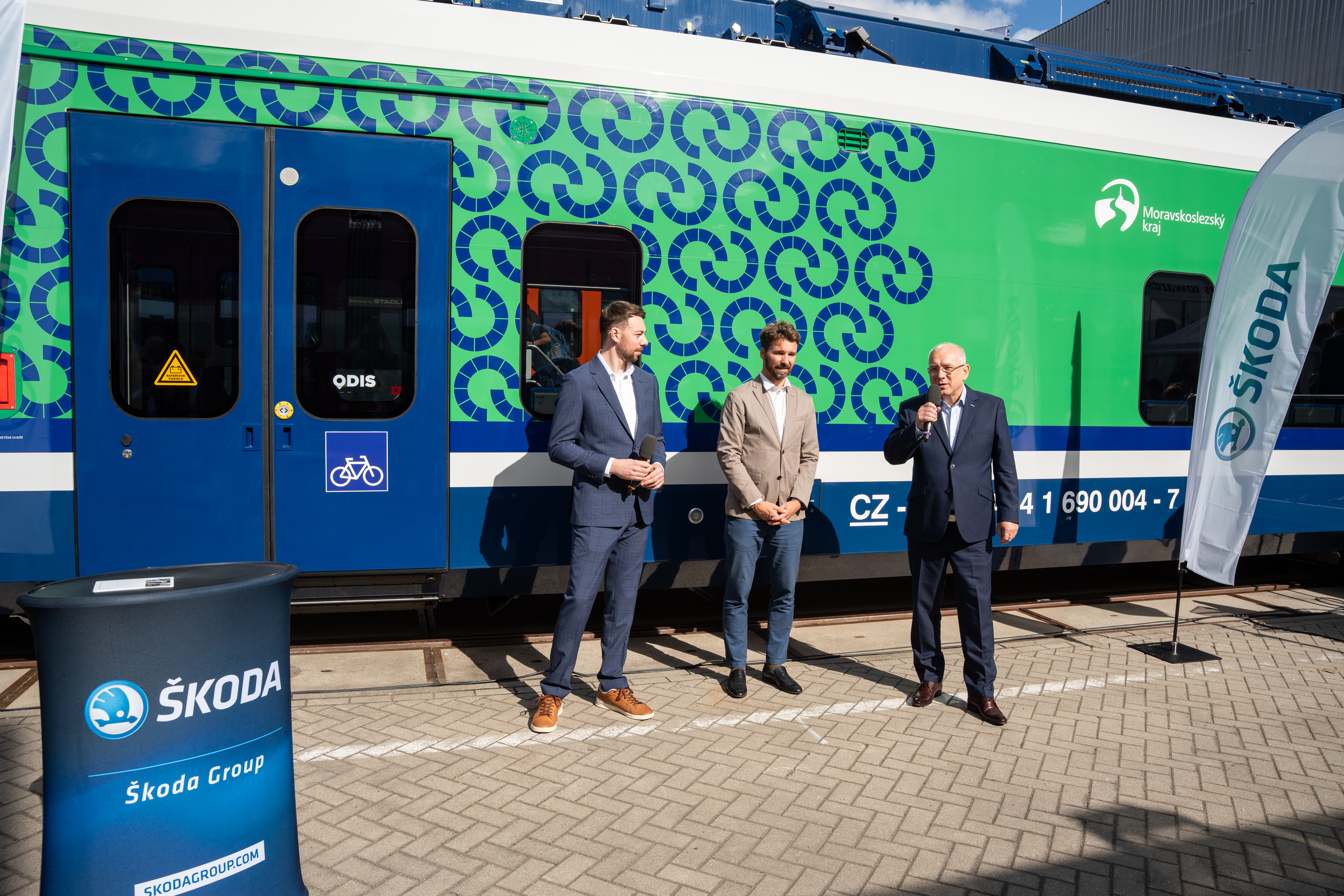
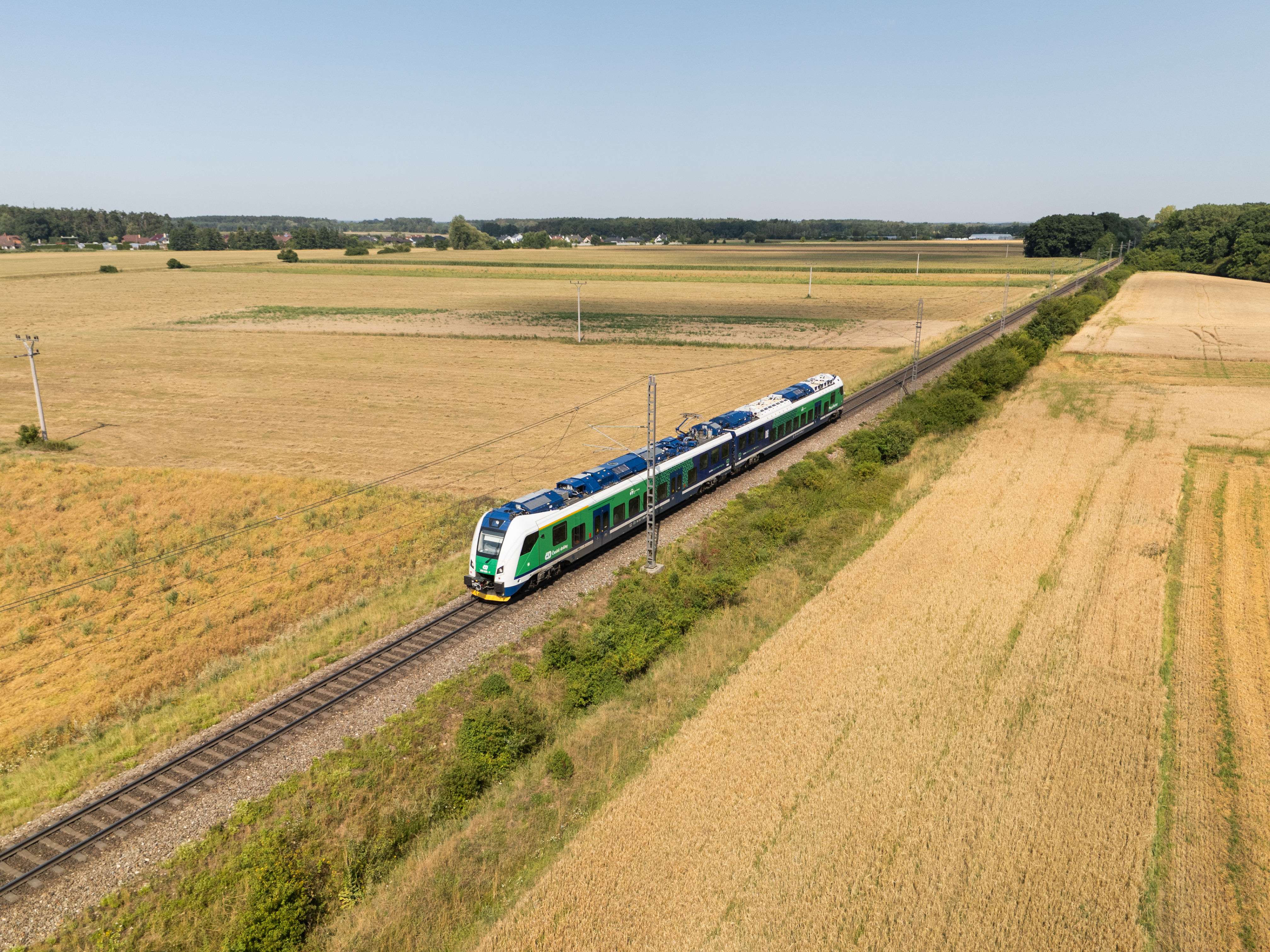
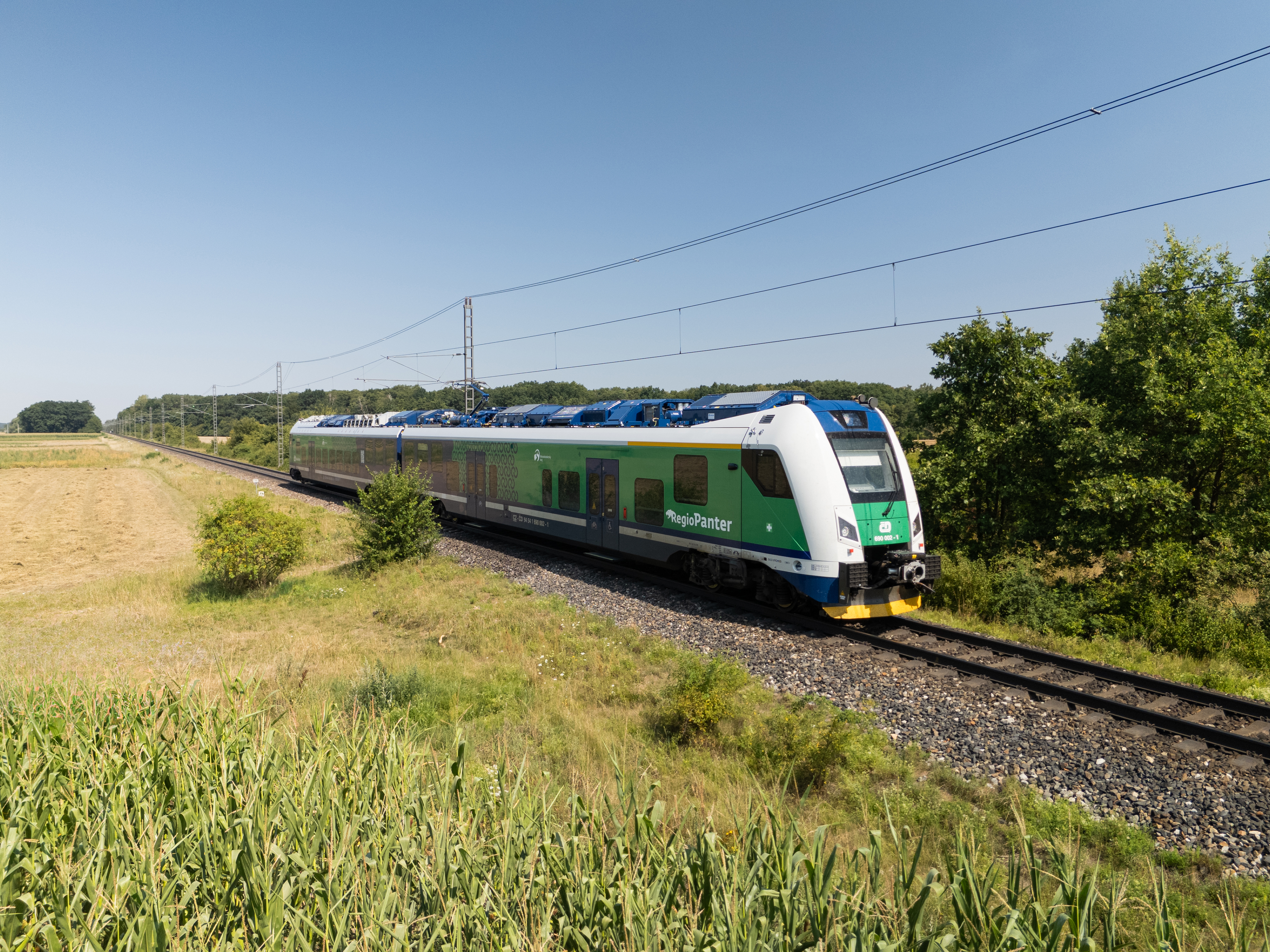
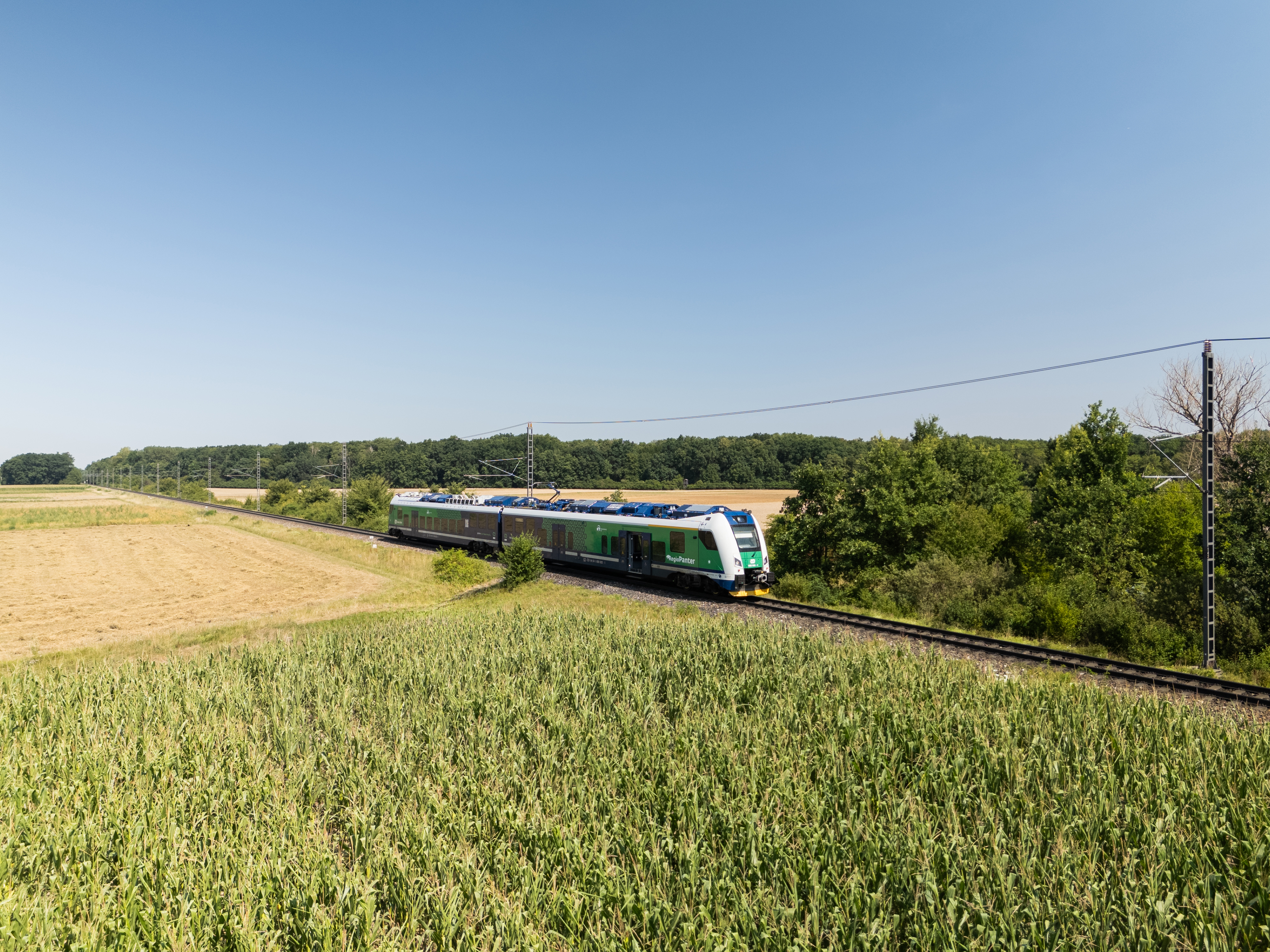
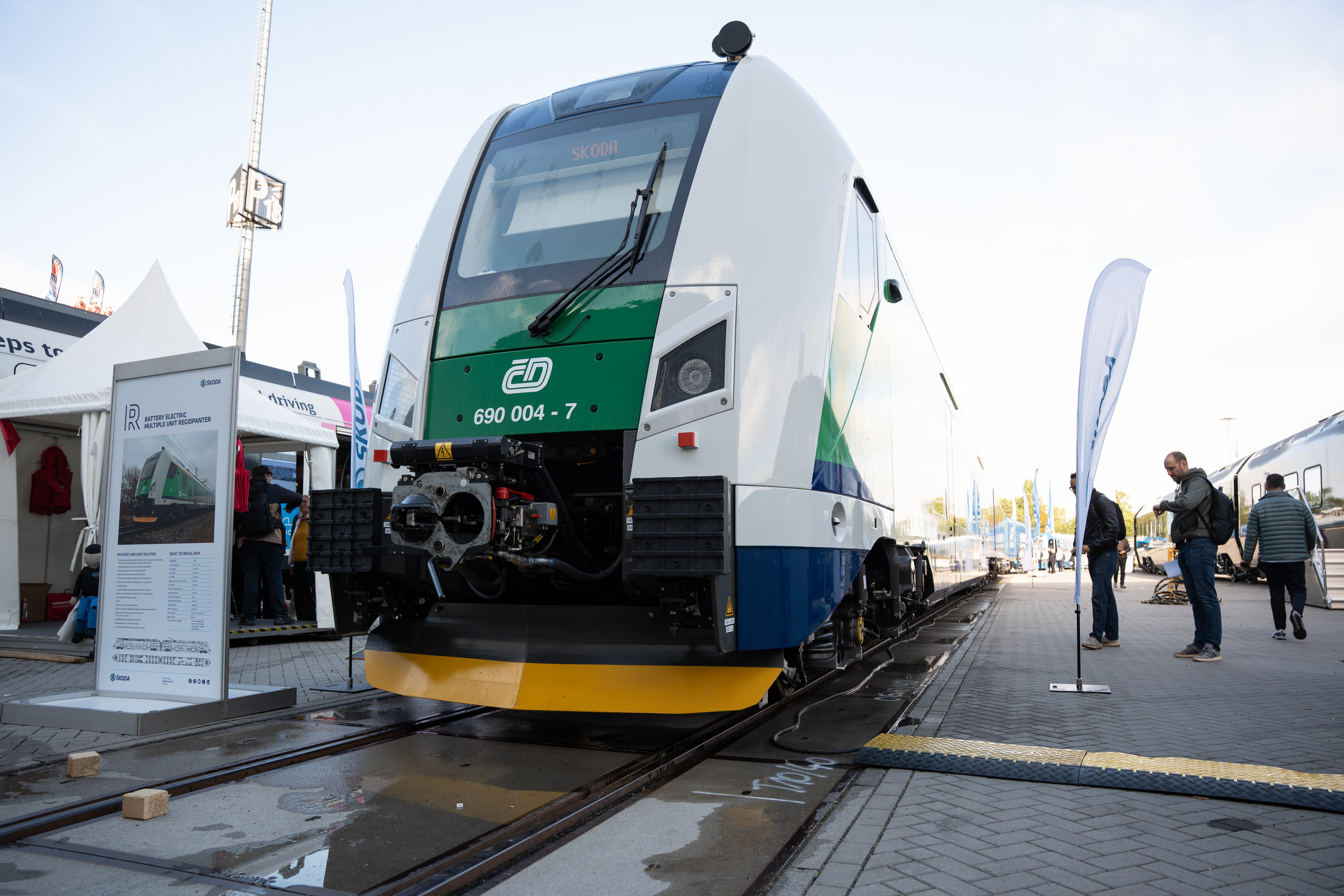
Škoda Group, a leading European manufacturer of solutions for modern and zero-emission public transport, is presenting its battery trains at InnoTrans in Berlin for the first time, at the world’s leading trade fair for transport technology. Visitors can see the new generation of the RegioPanter battery electric multiple unit, which combines operation under overhead lines with battery-powered running and enables zero-emission rail transport to be introduced on non-electrified lines as well.
A European export bestseller
Škoda battery trains have quickly become one of Europe’s export bestsellers in their category. Škoda Group currently has more than one hundred units featuring battery technology at various stages of production and order fulfilment for customers in several European countries. The scale of these orders confirms that battery traction is becoming one of the key solutions for the rapid modernisation of regional rail transport without the need to wait for the complete electrification of the entire network.
“InnoTrans is where the entire rail world comes together. We are bringing a technology that is no longer a vision of the future, but a successful export product and a proven solution for everyday transport. Battery trains make it possible to offer the comfort of electric rail travel even in regions where parts of the network are not electrified, without having to wait for lengthy and costly infrastructure projects. Growing customer interest across Europe confirms that we have developed a product that meets the needs of transport authorities, operators and passengers alike.”
Tomáš Ignačák, Deputy Chairman of the Board of Škoda Group
Benefits proven in real-world operation: more passengers and direct journeys without transfersBenefits proven in real-world operation: more passengers and direct journeys without transfers
The benefits of battery trains are being confirmed in everyday operation. The first four Škoda units entered service in the Moravian-Silesian Region of the Czech Republic in December 2024. In addition to demonstrating the reliability of the new technology, day-to-day operation has shown their ability to simplify journeys, improve passenger comfort and attract new passengers to rail. Higher train utilisation is also translating into increased fare revenues and more efficient use of public transport authorities’ funding.
On routes in the Moravian-Silesian Region, the units can cover non-electrified sections on battery power and then continue under overhead lines once they join an electrified corridor. This removes the need to transfer between diesel and electric trains and gives passengers faster and more comfortable direct connections to the regional capital, Ostrava. With its higher standard of passenger services, the modern train is becoming a more attractive alternative to private car travel.
The impact is already visible in operating figures. On selected services, passenger numbers have increased by up to 20%, as travelers can now use direct connections without having to switch between diesel and electric trains. The first battery units have covered around 1.25 million kilometres in approximately 21 months of operation. The first four units also save at least 200,000 litres of diesel and approximately 500 tonnes of CO₂ emissions every year.
InnoTrans
“The greatest value of a battery train is not the battery itself, but the opportunity to create better public transport. A single train can eliminate a transfer, shorten journey times, improve comfort and at the same time replace diesel operation with zero-emission transport. The growth in passenger numbers in the Moravian-Silesian Region shows that such a solution is attractive not only from a technological perspective, but above all to passengers themselves.”
Tomáš Ignačák, Deputy Chairman of the Board of Škoda Group.
An electric train that does not need overhead wires along the entire route
RegioPanter connects electrified and non-electrified lines within a single journey. Under overhead lines, it uses standard electric traction while simultaneously charging its batteries; on sections without overhead electrification, it automatically continues using energy stored in the batteries. Regenerative braking also contributes to battery charging, including on non-electrified sections.
The new generation of RegioPanter was designed from the outset as a fully-fledged battery electric multiple unit (BEMU). This is reflected in the new arrangement of the battery packs on the roof, the optimised traction system and the vehicle’s more efficient overall design.
In battery mode, the train offers a range of at least 80 kilometres and a top speed of up to 120 km/h; under overhead lines, it reaches up to 160 km/h. Continuous power output is 1,360 kW and, thanks to the traction system with SiC converters, remains the same in both electric and battery modes. The unit uses LTO batteries, which provide a high level of fire safety, long service life and high performance. Compared with the previous generation, the new technical solution reduces vehicle weight by several tonnes and significantly lowers energy consumption.
The comfort of modern electric rail travel on regional lines
The two-car unit, 52.9 metres long, offers 150 seats, including eight in first class, and a total capacity of 323 passengers. A modern interior, quiet and smooth running, and the possibility of direct journeys without changing trains bring a standard of travel to regional lines comparable with modern electric services on main corridors.
The vehicle is designed to combine operational flexibility with a high level of passenger comfort. This combination enables public transport authorities to improve services on routes where full electrification would require significantly more time and investment.
The unit is equipped with the European Train Control System ETCS Level 2 Baseline 3 and is designed for operation on both DC and AC electrified lines, specifically 3 kV DC and 25 kV 50 Hz AC. This makes it a flexible platform for different European railway networks.
Orders from several European markets
Škoda Group is already successfully deploying its battery technology in several European markets. It is manufacturing 15 new-generation units for České dráhy for operation in the Moravian-Silesian Region, has a contract for up to 36 battery trains in Slovakia, and has secured an order for up to 16 BEMU units in Latvia. Together with other ordered vehicles using battery technology, the total number of units at various stages of production and order fulfilment exceeds one hundred.
For European regions, battery units offer a way to reduce diesel operation more quickly on networks where a significant share of lines remains non-electrified. On main lines, they retain the advantages of standard electric operation.
A single vehicle type can therefore operate over an entire route combining electrified and non-electrified sections. This creates opportunities for new direct connections between smaller towns and regional centres while reducing local emissions, noise and fossil-fuel consumption.
Battery mobility as part of Škoda Group’s long-standing expertise
Today’s battery trains build on Škoda Group’s long-standing experience with alternative traction technologies. As early as the 1920s and 1930s, the company manufactured battery locomotives; since 2015, Škoda battery trams capable of operating on sections without overhead wires have been in service in Türkiye, and the Group also uses battery technology in modern trolleybuses.
New-generation battery RegioPanter – key technical specifications
Number of cars: 2
Unit length: 52,900 mm
Width: 2,820 mm
Height: 4,260 mm
Seats: 150, including 8 in 1st class
Total capacity: 323 passengers
Continuous power output: 4 × 340 kW = 1,360 kW
Maximum speed under overhead lines: 160 km/h
Maximum speed in battery mode: 120 km/h
Battery-mode range: at least 80 km
Power supply systems: 3 kV DC / 25 kV 50 Hz AC
Alternative traction: battery-electric
Batteries: LTO
Traction system: optimised system with SiC converters
Train control system: ETCS L2 BL3 + Class B national system
Regenerative braking: battery charging during braking, including on non-electrified sections
New generation of trains