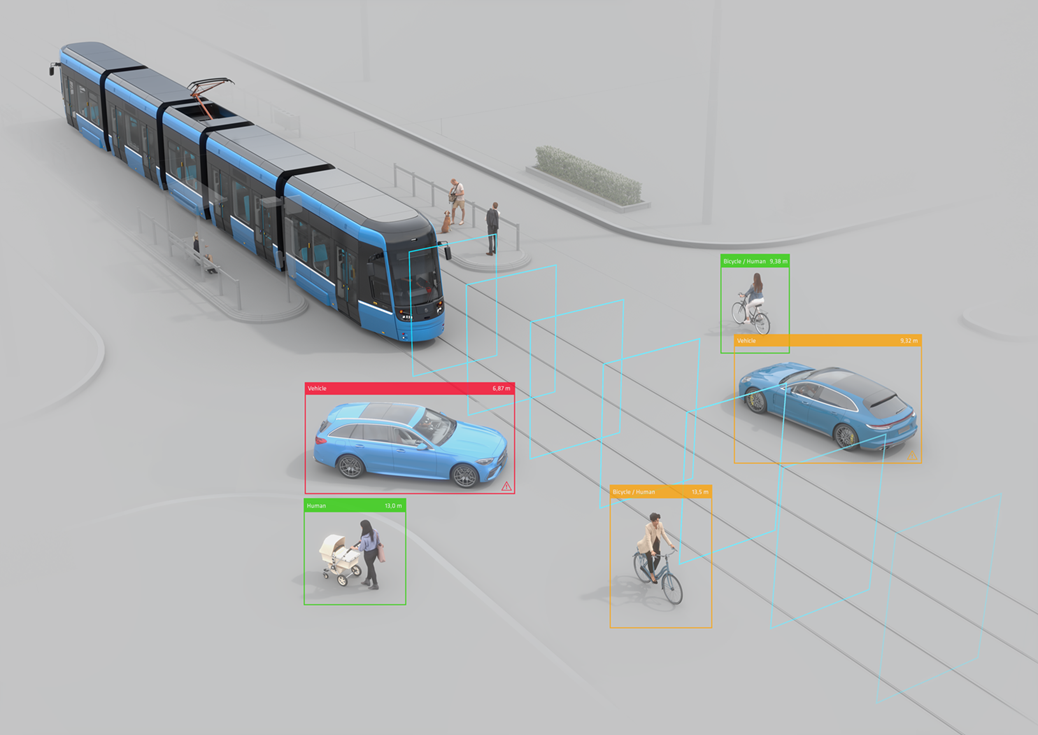
“A safety system should assist the driver, not overwhelm them with warnings. That is why we based ACS detection on the concept of a virtual tunnel. The system does not simply assess what is in front of the tram but focuses primarily on what actually enters its travel corridor. This results in more accurate risk assessment and fewer false alarms,” explains Jiří Liberda.
ISL uses vehicle localisation and infrastructure data to intelligently control speed. For example, it can help prevent the tram from travelling too fast through a curve or support the driver when operating on a new or less familiar route.
Mobility Apps: Data for More Efficient Operations
Škoda Digital’s Mobility Apps connect vehicle data with tools for fleet management, diagnostics and maintenance.
Fleet Management enables operators to plan and manage vehicle movements, monitor vehicle availability and access up-to-date information about the entire fleet. Predictive diagnostics then uses vehicle data and artificial intelligence to identify potential faults before they occur.
AI-powered maintenance is also complemented by Visual Inspection, a product that Škoda Group added to its product portfolio this summer. The solution enables automated visual inspection of selected vehicle components and can identify damage, deformation and other irregularities. This helps operators detect potential issues more quickly and plan maintenance more efficiently.
Smart Depot: A Step Towards Autonomous Operations
Smart Depot provides an environment where individual technologies are connected into an automated depot operation.
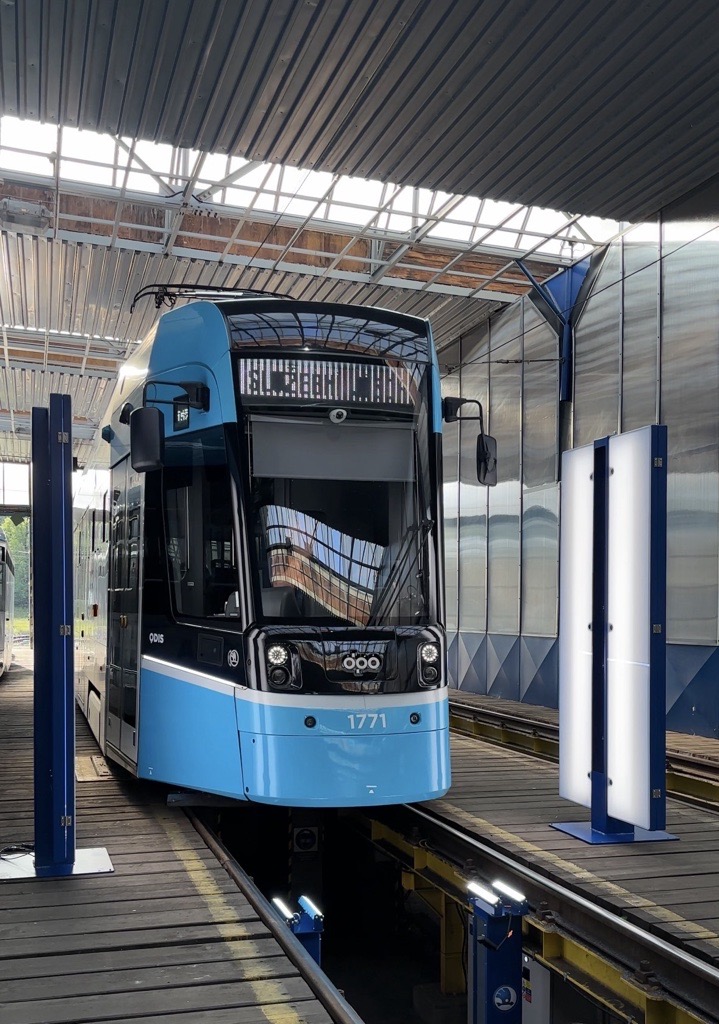
In Mannheim, Škoda Group demonstrated, among other things, autonomous tram shunting, automated parking, the management of individual vehicle movements, obstacle response and automated passage through a vehicle wash.
Smart Depot represents an important step towards fully autonomous operations. Automating activities within the depot allows the technologies to be tested and validated in a controlled environment and gradually developed for the more complex conditions of urban transport.
From Demonstration to Product
Mannheim was not the only opportunity this year for Škoda Group to demonstrate its technologies in real-world operations. In Wrocław, another demonstration of the ACS and ISL systems took place, giving customers and industry experts the opportunity to see the systems operating directly on a vehicle.
Live demonstrations are an important part of Škoda Group’s development process. They provide an opportunity to gather feedback from operators, validate technologies in real-world conditions and demonstrate their practical benefits.
At the same time, they illustrate the path Škoda Group follows in bringing individual technologies to market: from development and testing, through live demonstrations, to products used in everyday operations. Visual Inspection is a prime example, having been added to the product portfolio this year.