


History of the Škoda brand
Few brands have made Czechia as famous as the ŠKODA winged arrow. Škoda investment takes care of its protection.
ŠKODA INVESTMENT a.s. is a sister organisation of ŠKODA TRANSPORTATION A.S. ŠKODA INVESTMENT a.s. is the owner of an extensive portfolio of trademarks (ŠKODA and the WINGED ARROW) and other related rights, and it coordinates intellectual property rights for companies within the Škoda Group as well as other users of the ŠKODA and the WINGED ARROW trademarks.
ŠKODA INVESTMENT a.s. dictates the global strategy for the development of the ŠKODA and the WINGED ARROW trademarks of the Škoda Group and enforces the rights to them.
The intellectual property of ŠKODA INVESTMENT a.s. and related rights are based on the history and traditions of the world-famous ŠKODA and WINGED ARROW trademarks, including their combinations.
The aim of ŠKODA INVESTMENT a.s. is to further develop the ŠKODA and WINGED ARROW trademarks and the related portfolio of trademarks, and to strengthen their good reputation.
1839 – Sir Emil Škoda, founder of the ŠKODA brand, is born
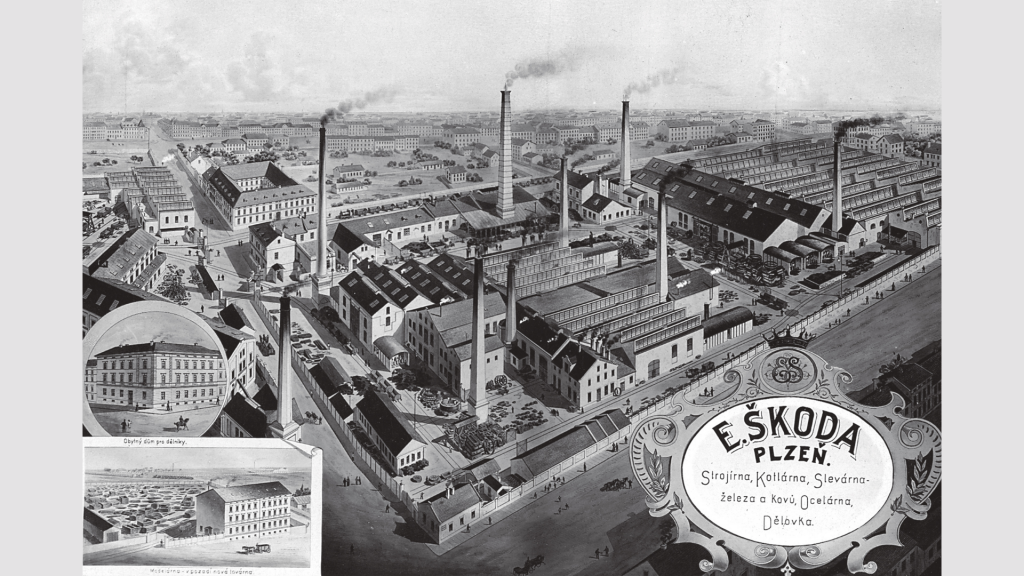
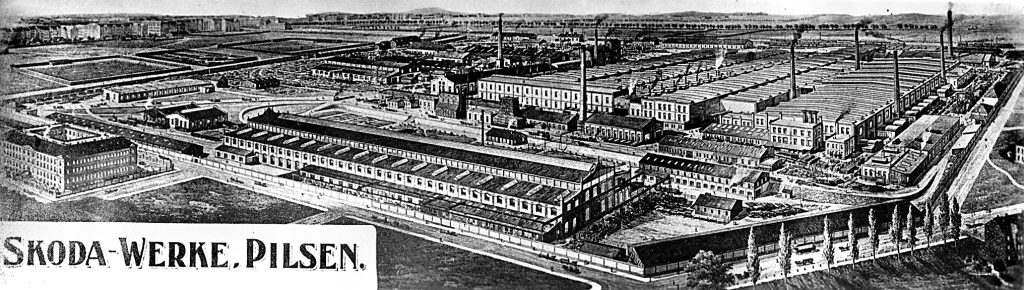
1859 – In this year, Count Christian Wallenstein moved part of the production of the machine-works and ironworks from Sedlec near Starý Plzenec to Pilsen. The machine-works initially specialised in the production of steam engines, equipment for distilleries, sugar factories, breweries, agricultural tools and other engineering equipment.
1866 – The company that had been moved to Pilsen was joined by the young engineer Emil Škoda, who began working here as the Chief Engineer. Škoda was a very far-sighted entrepreneur capable of estimating how the engineering industry would develop and what products would be in demand on the market. He systematically sought and attracted experienced experts from other companies to Pilsen. He understood that if the Pilsen machine-works were to become a significant player on the market at the time, it would be necessary to invest heavily in the company, introduce new fields and modernise its production.
1869 – Count Wallenstein rejects Emil Škoda’s proposals, including proposals for investments in the machine-works, and opts to sell the company to Emil Škoda instead. From this year on, the company bore the name ŠKODOVY STROJÍRNY, later E. Škoda v Plzni.
1884 – The successful development of the factory continues. Emil Škoda managed to correctly estimate that there would be great interest in weapons in the turbulent Europe and placed his bets on this production programme. In this year, the construction of a modern steelworks, essential for the production of quality weapons, began.
1884
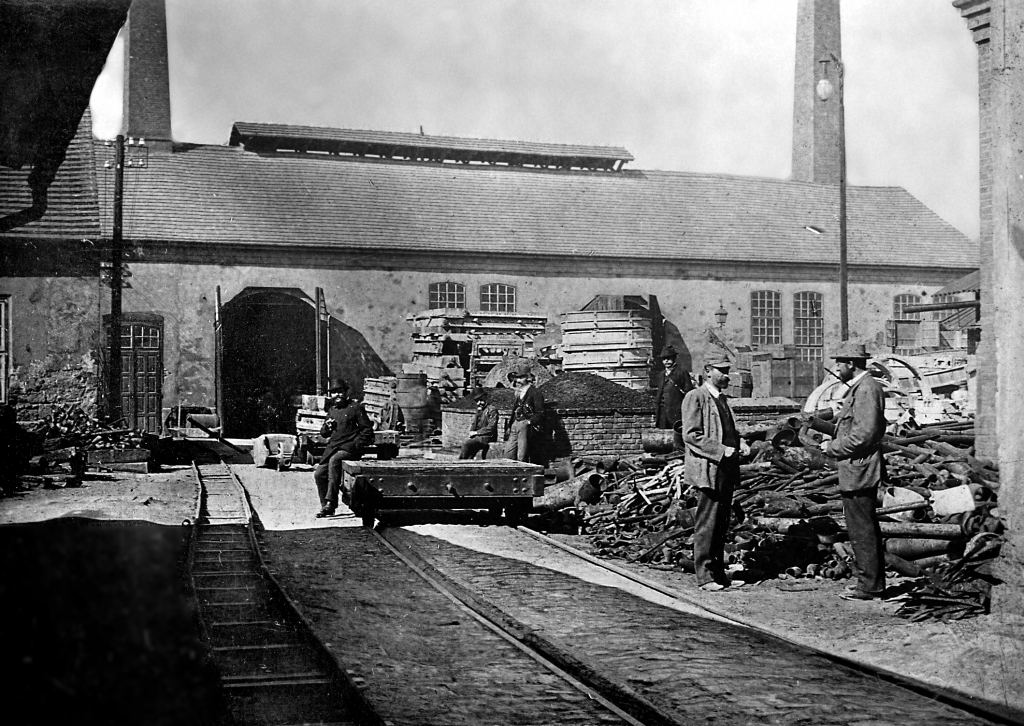
1886 – Completion of the steelworks construction. From this year, licensed Salvator-Dormus machine guns and other weapons were marked with the ŠKODA brand.
1890 – The ŠKODA Arms Department is established and, despite many problems, the entire programme is successful.
1890
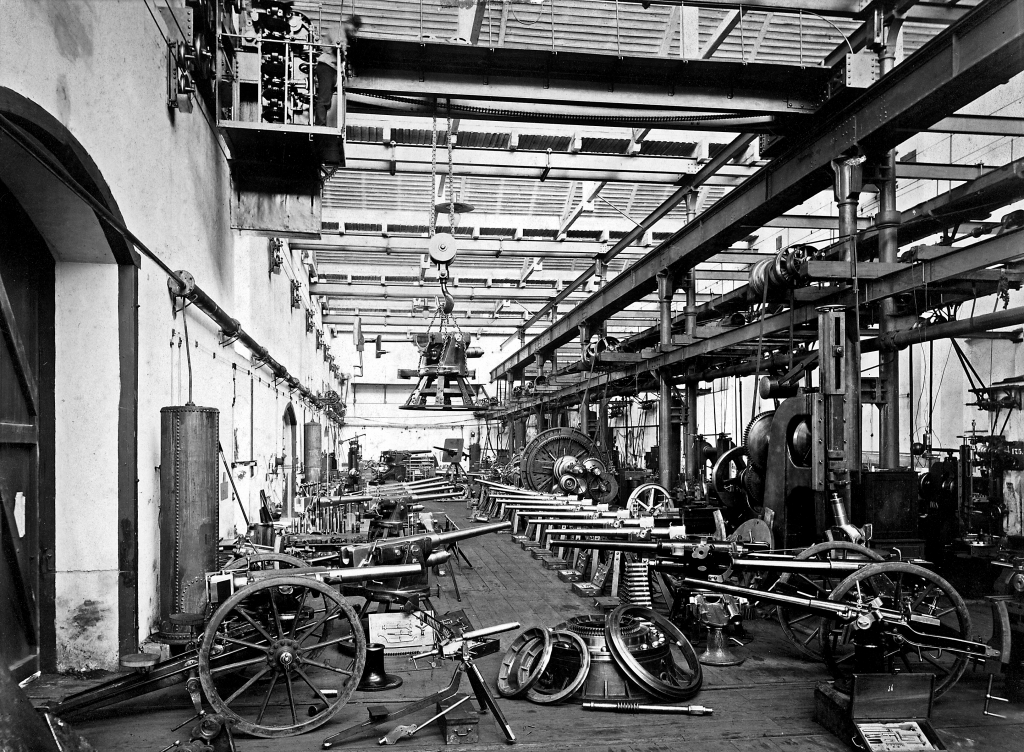
1895 – The first ŠKODA field cannon of its own design with a long recoil barrel is manufactured.
1896 – A new weapons hall is built. The ŠKODA brand is one of the largest European arms manufacturers.
1896 – The 1000th steam engine under the ŠKODA brand was produced.
1899 – The company changed from a family business to a joint-stock company.
1899
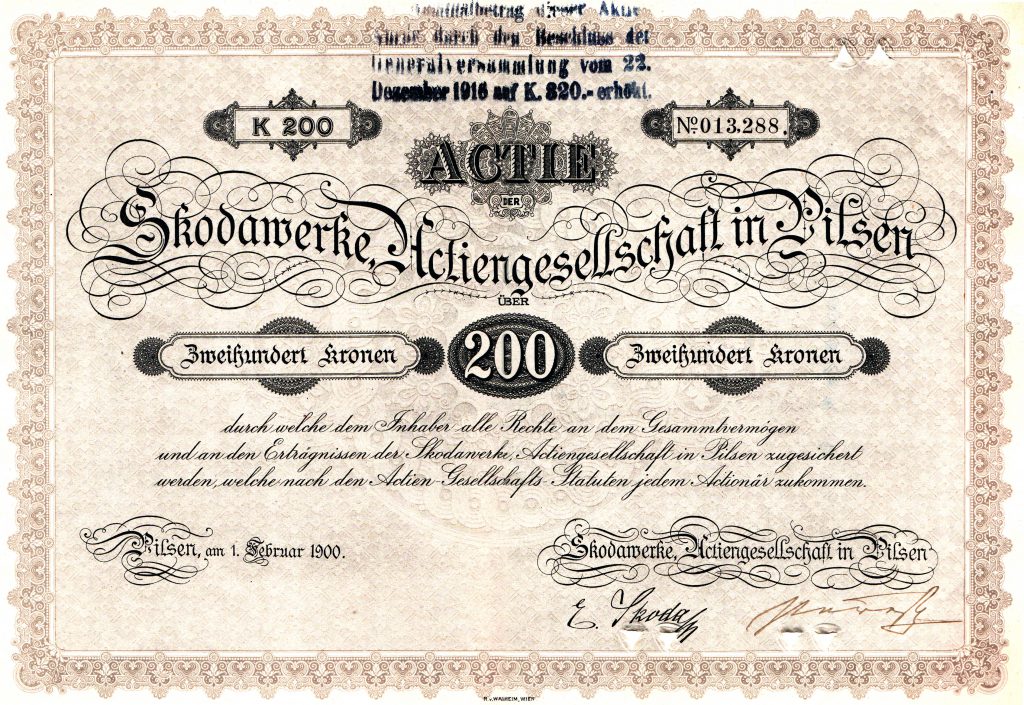
1900 – Emil Škoda, the founder of the successful ŠKODA company and brand, dies.
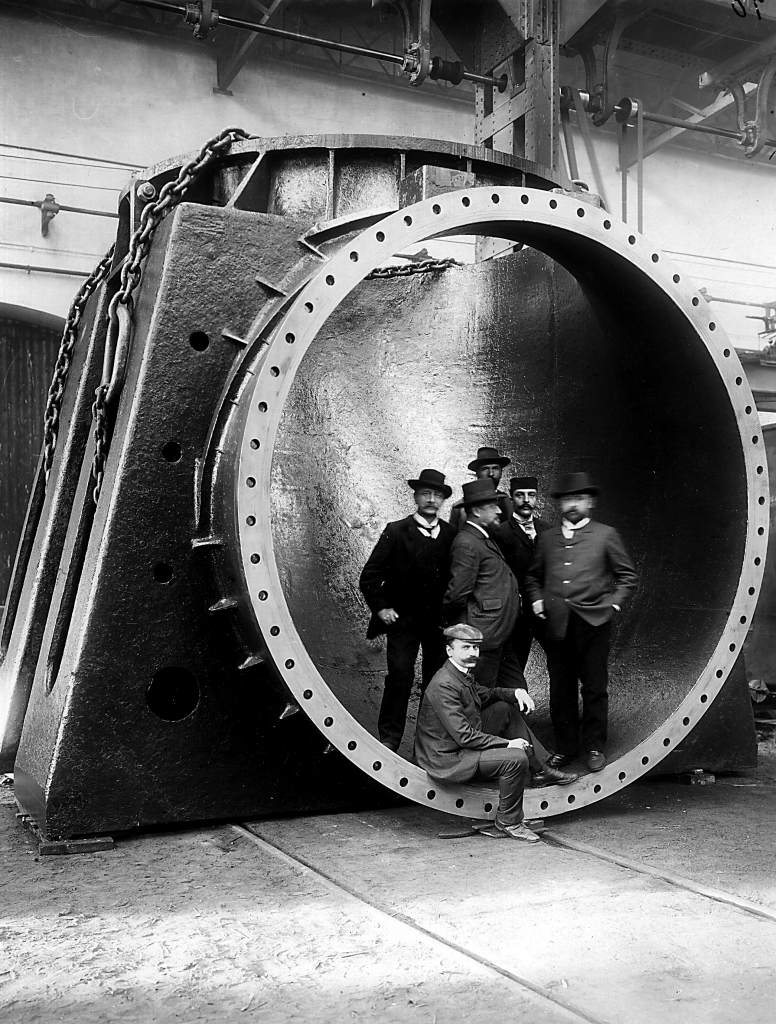
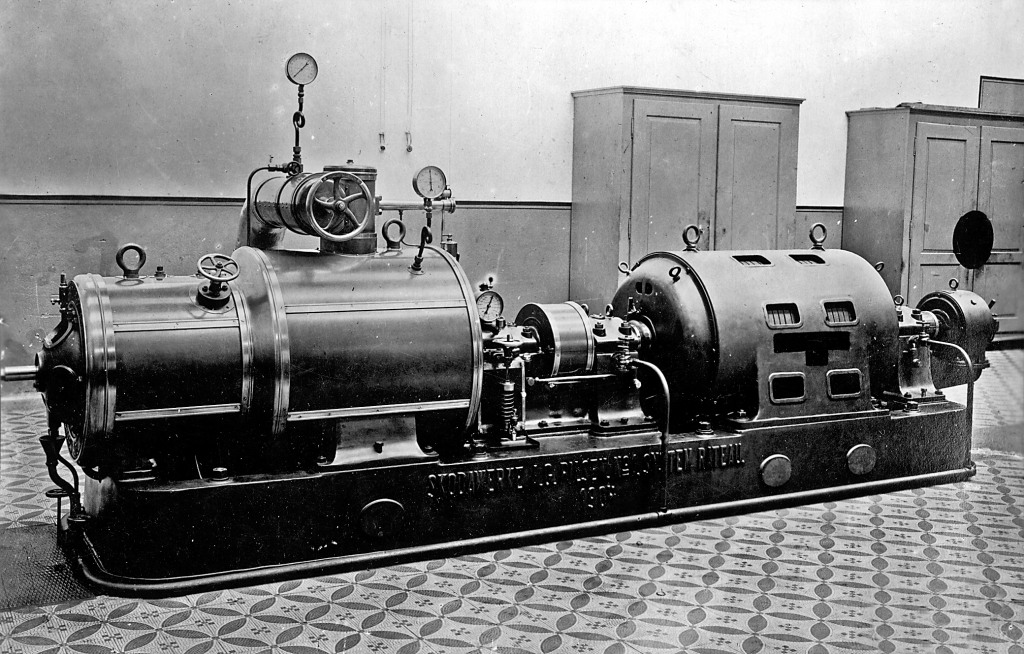
1904 – ŠKODA is not just an arms plant, however. Under the ŠKODA brand, the company continues to produce steam engines, gas engines, dock equipment, equipment for the food industry and various structures, and is also becoming renowned for the production of large castings for shipbuilding. In 1904, the company’s management decided to introduce a new production program for steam turbines. The first ŠKODA turbines were made under a French license.
1904
1907 – ŠKODA’s own research institute is established.
1907
1902
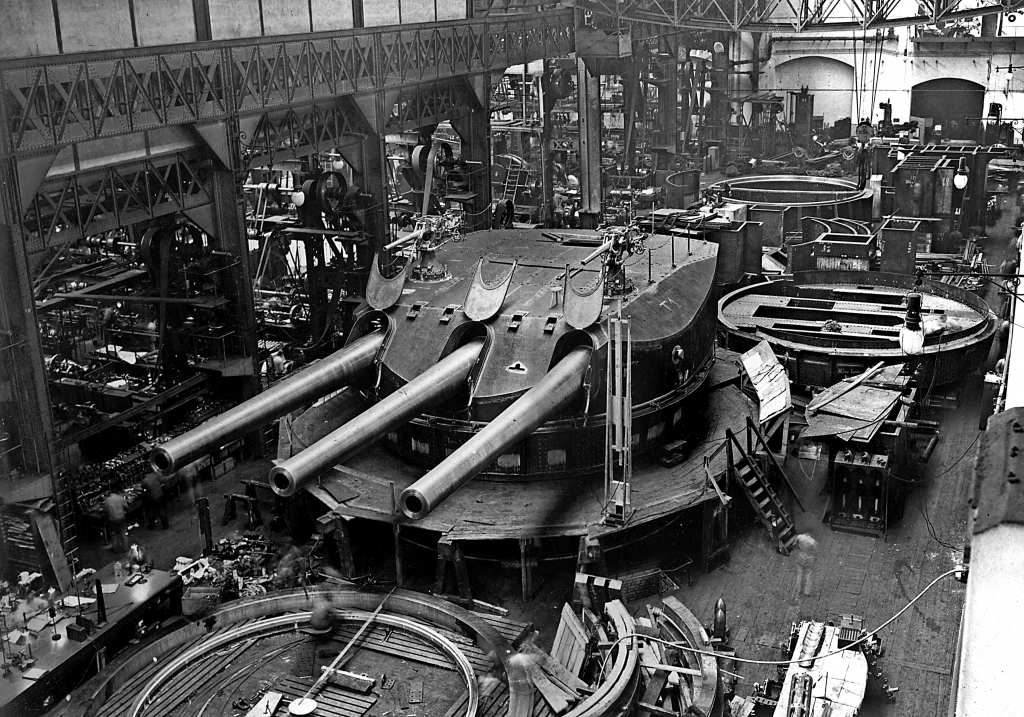
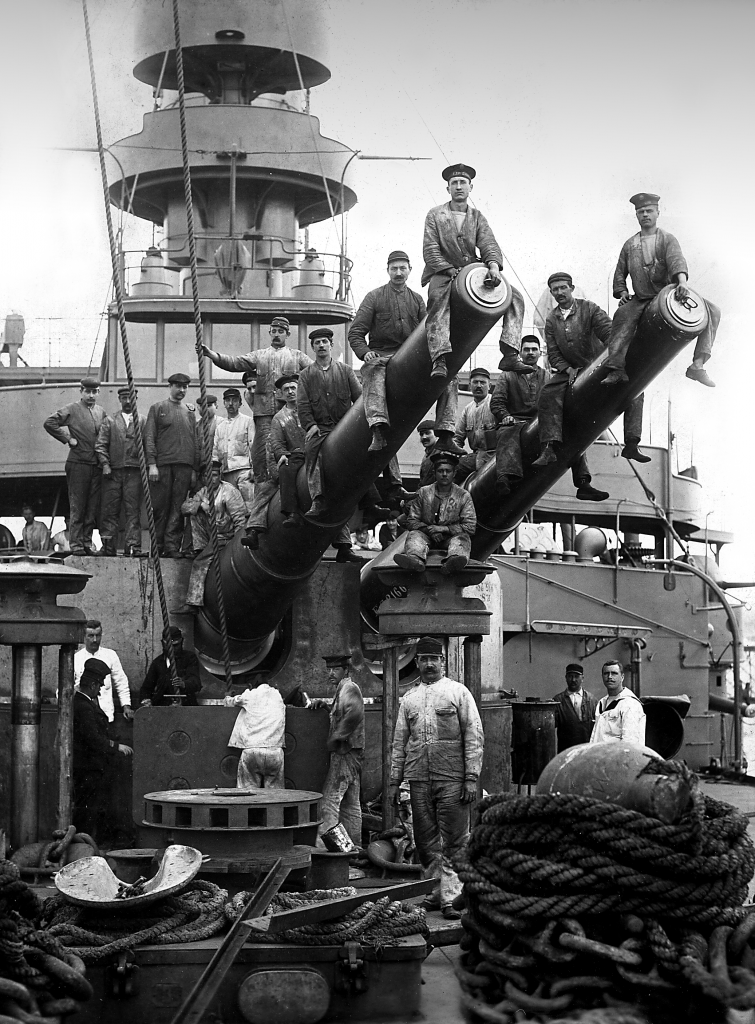
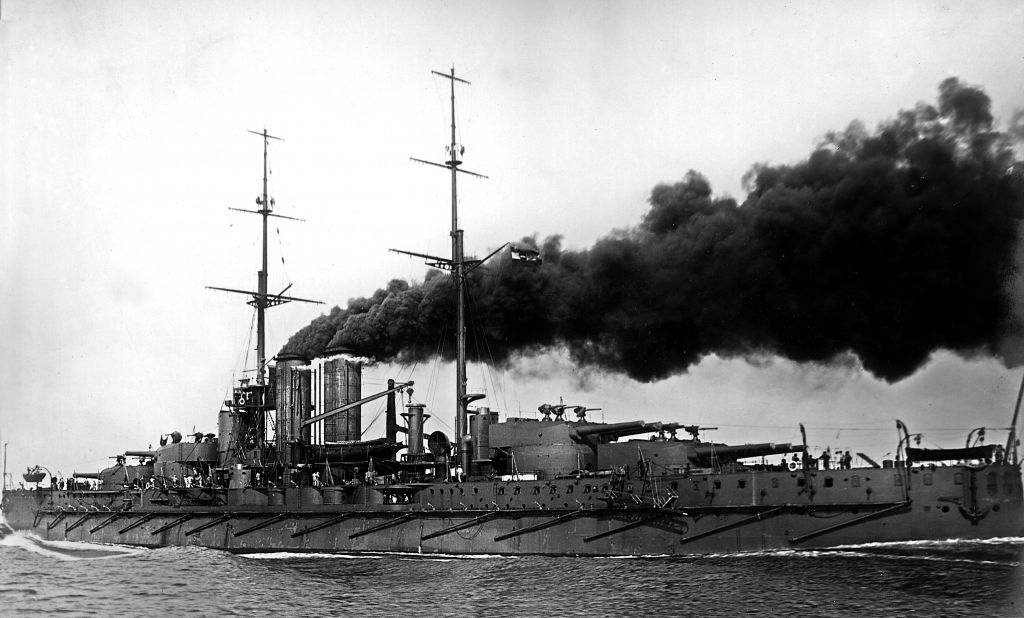
1902 – ŠKODA becomes a monopoly supplier of weapons to the Austro-Hungarian navy.
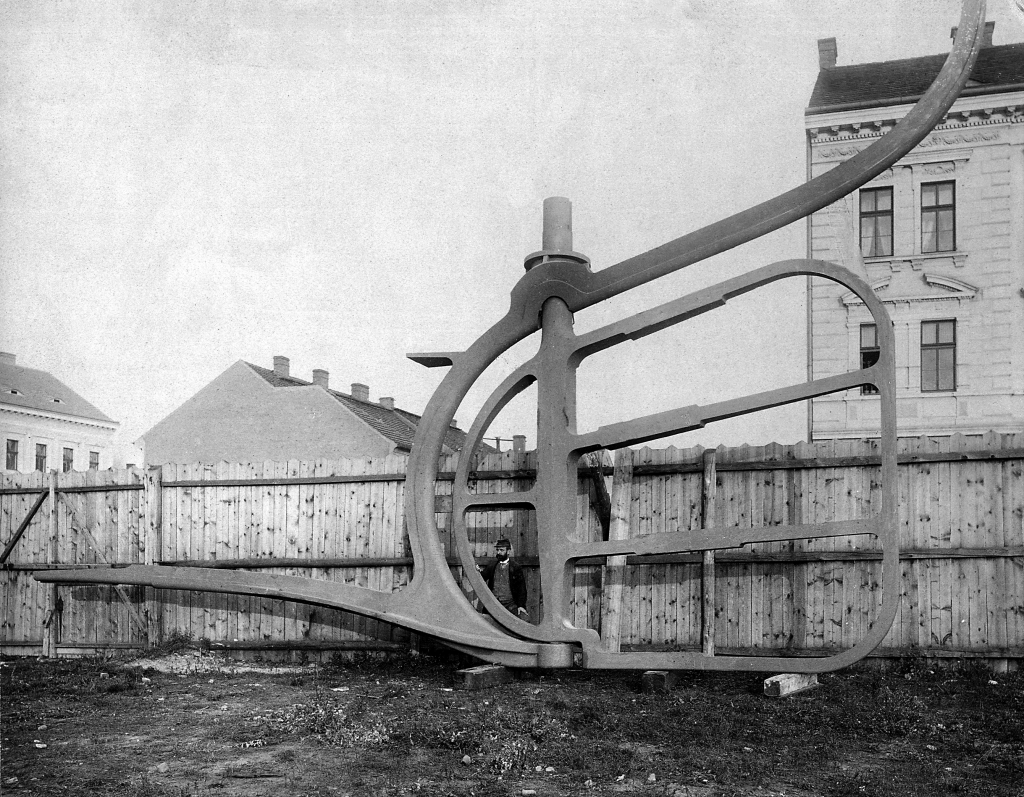
1905 – The first crankshafts for shipyards are manufactured under the ŠKODA brand.
1905
1907 – A crane department is established. Cranes of various designs and load capacities were exported under the ŠKODA brand to Belgium, Italy, Japan, Chile, Poland, Argentina, Turkey and South Africa.
1911 – Establishment of an in-house engineering department for precision and special ŠKODA machine tools.
1914 – The First World War brings a significant boom to the ŠKODA brand. ŠKODA weapons, especially heavy cannons and howitzers, had proven themselves on the fronts.
1918 – The end of the War and the collapse of Austria-Hungary resulted in a great crisis at ŠKODA. There was no interest in weapons, traditional markets fell apart, and long-held trade relations were severed. In order to survive, the factory had to radically change its production programme. It gained financial stability by entering the French concern Schneider et Cie. The company’s new management was quickly looking for fields that would fill the gap created by the limited arms production.
1920
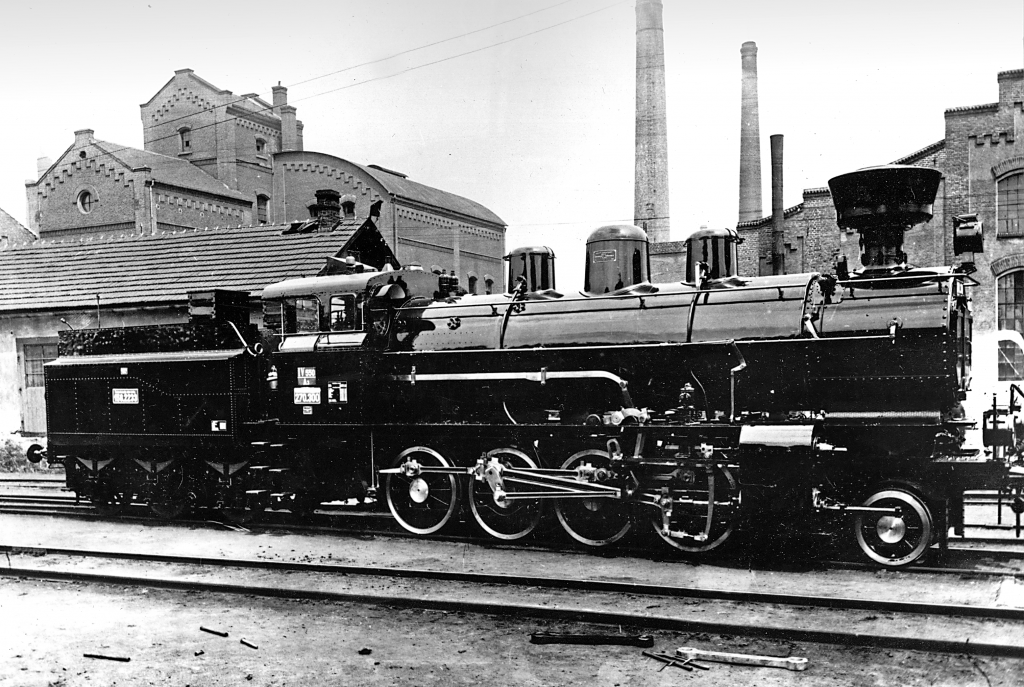
1920 – Production of steam locomotives begins in Pilsen under the ŠKODA brand. The first was locomotive was marked 1Lo.
1921 – Establishment of the ŠKODA shipbuilding department. The production programme was extensive, including everything from river boats and cargo and tug boats to military patrol boats, passenger liners and floating cranes.
1921 – First export of ŠKODA locomotives for the Romanian State Railways (180 units).
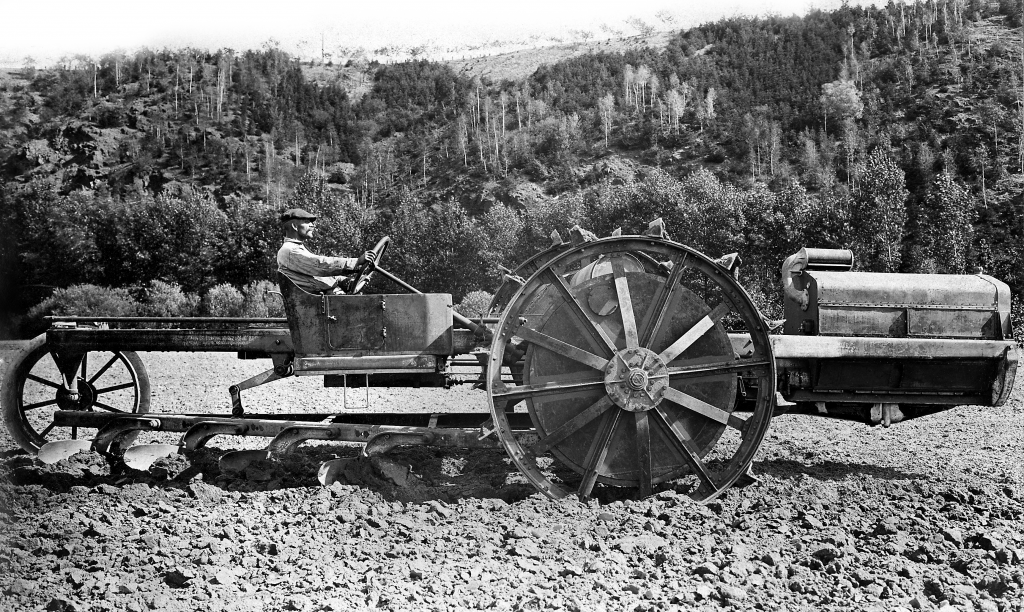
1922 – Production of the ŠKODA motor plough for deep ploughing, also exported to Indonesia.
1922
1923 – On 15 December, a new trademark was registered in the form of a winged arrow in a circle, which is still used today with minor modifications. ŠKODA brand products have been marked with this trademark since this year.
1923
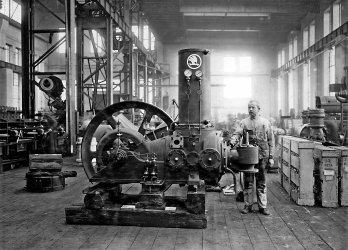
1923 – The production of a steam locomotive of our own design begins.
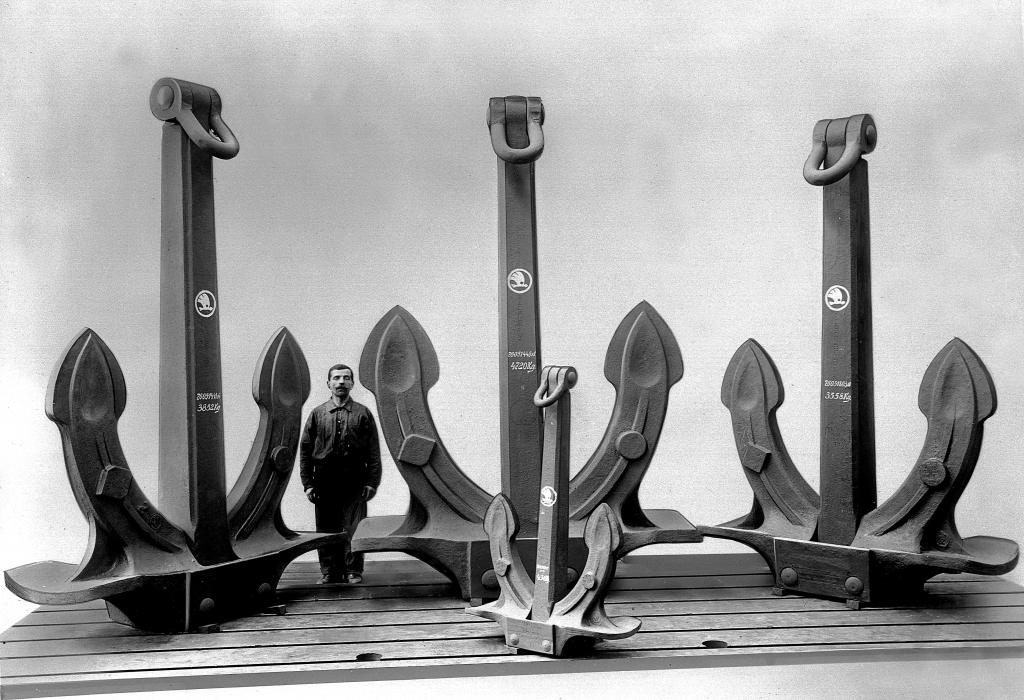
1923 – 50-tonne crankshafts for American and Swedish shipyards are produced.
1923 – Production of transformers begins under the ŠKODA brand.
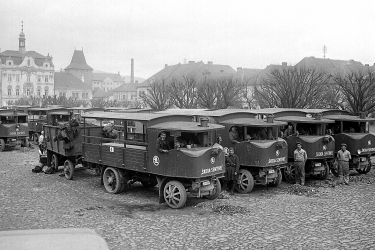
1924 – Licensed production of ŠKODA steam trucks under a licence from Sentinel is launched; these are mainly used by the military. This takes the ŠKODA brand to the road.
1924
1925 – The ŠKODA group buys the Laurin and Klement car plant in Mladá Boleslav, where vehicles under the ŠKODA brand have been produced since then. The production programme was very extensive at the time continued to expand. Traditional weapons as well as power equipment, transformers, cars and trucks, tractors, ships, planes, tanks, bridge structures, cranes, locomotives, traction engines, machine tools, diesel engines, cigarette and packaging machines bore the ŠKODA brand. ŠKODA steam turbines became global; ŠKODA built power plants, sugar factories, breweries and distilleries at home and abroad…
1927 – The first ŠKODA electric locomotive is manufactured. In the 1920s, ŠKODA established its own electrical factory in Pilsen Doudlevce. The company successfully overcame the crisis after the First World War, and ŠKODA gradually became the largest and most important industrial company in Czechoslovakia, and one of the most important in Europe. From 1921 onwards, plants in Prague, Smíchov, Hradec Králové, Hrádek u Rokycan, Brno, Komárno, Dubnica nad Váhom and coal mines in Most and Pilsen basins were gradually incorporated into the concern. ŠKODA bought significant shareholdings in Avia Praha (1926), Omnipol, Čs. zbrojovka Brno and Kabel Kladno.
1928 – First export of ŠKODA steam locomotives to South America (Colombia).
1928 – First export of ŠKODA locomotives to China.
1928 – ŠKODA introduces its own aircraft engines at an exhibition in Berlin.
1928 – Production and export of ŠKODA road rollers for Colombia.
1929 – Production of cars of proprietary design.
1932 – Production of complete equipment for sugar cane mills for the domestic market and for export, e.g. to India.
1923
1934 – Introduction of assembly-line production of cars in the ŠKODA plant in Mladá Boleslav.
1934
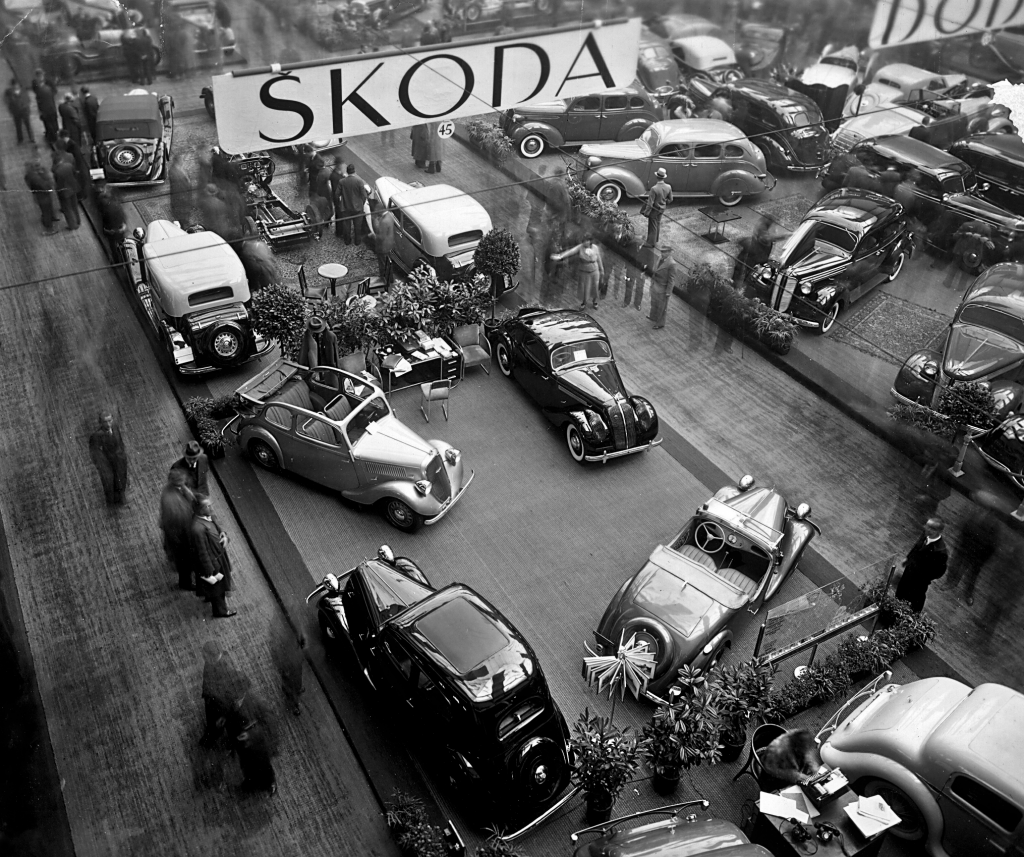
1936 – The first ŠKODA 1 Tr trolleybus for Prague is built in Pilsen.
1936
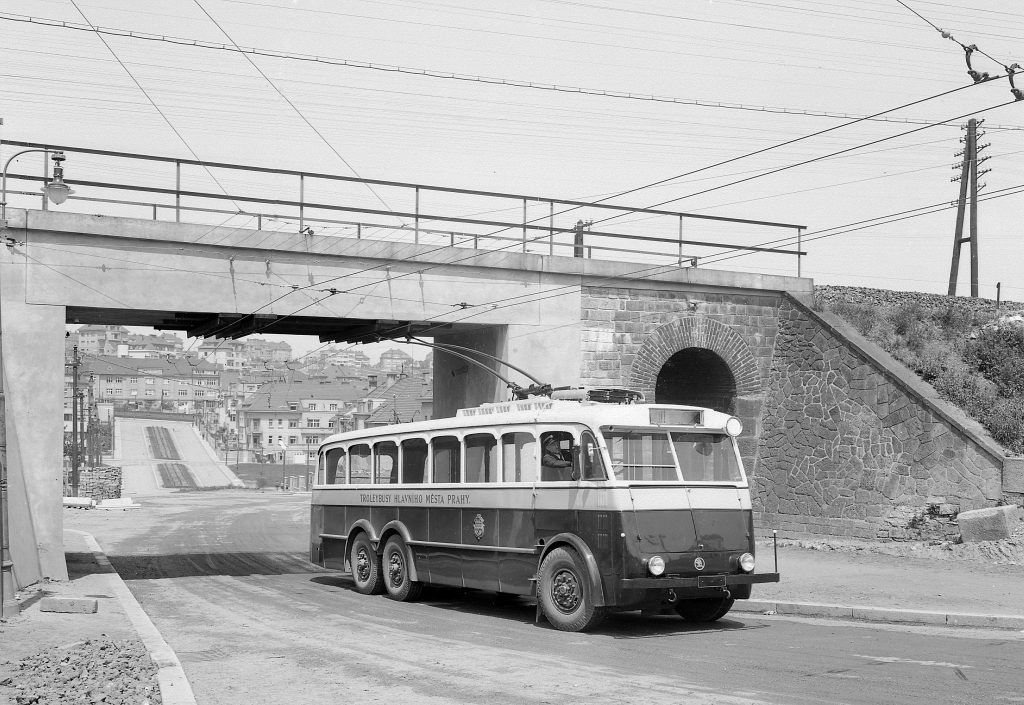
1938 – Delivery of locomotives to South Africa.
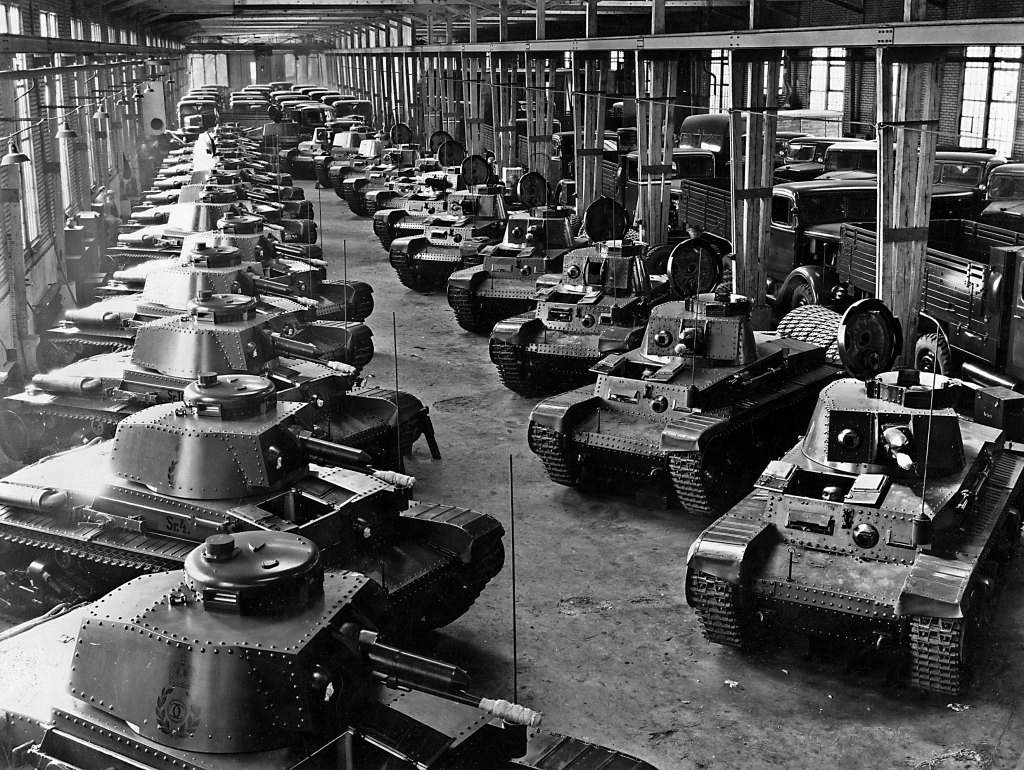
1939 – The company Schneider sells its stake to Czechoslovak banks. World War II brought another turning point in the history of the company. After the occupation, ŠKODA and its plants were incorporated into the Reichswerke Hermann Göring group. Once again, the company became a primarily arms and ammunition factory, but mainly German products were produced. Developments in other industries were limited, and ŠKODA lost its markets and customers again.
1939
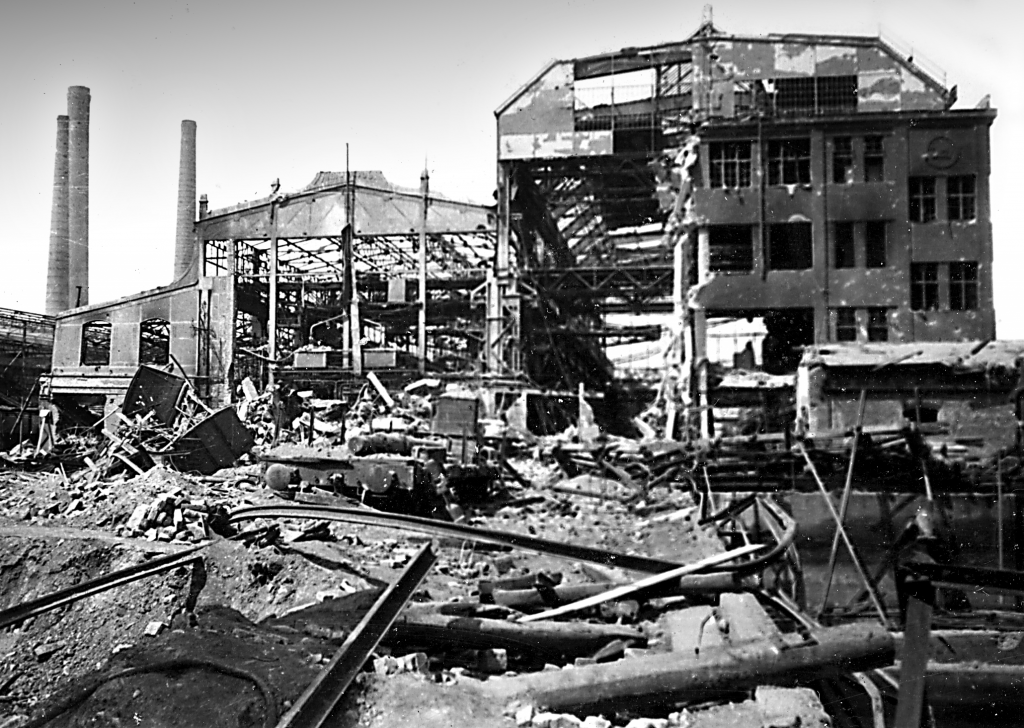
1945 – In April of this year, ŠKODA Pilsen was severely hit by Allied bombing and largely destroyed.
1945
1945 – National administration established.
1946 – ŠKODA becomes a national company.
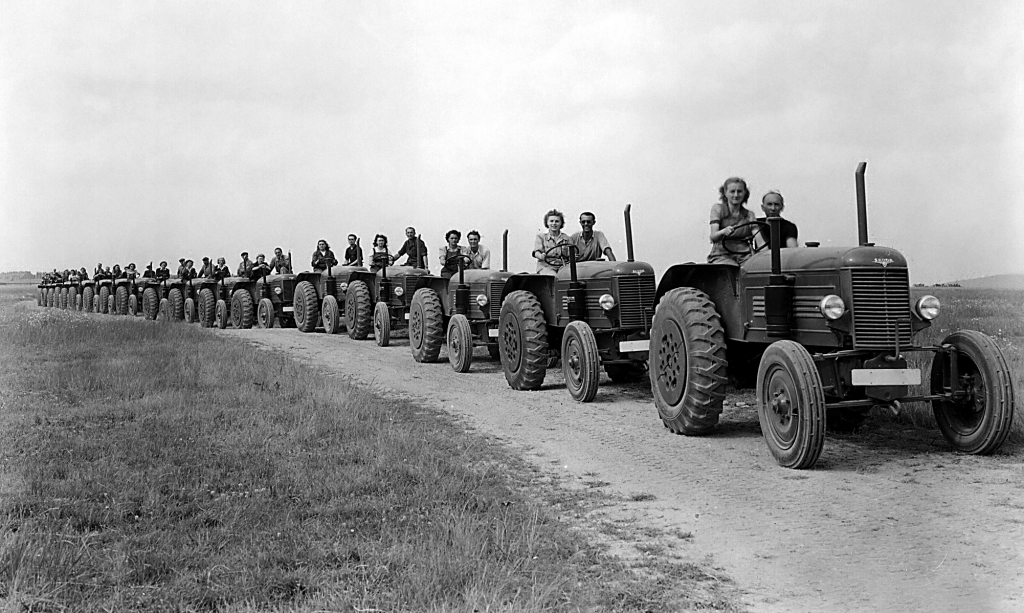
1946 – Resumption of production of ŠKODA tractors. The first ŠKODA tractors were manufactured in the second half of the 1920s.
1946
1949 – The first export of ŠKODA locomotives to the Soviet Union.
1950 – Within the reorganization of the Czechoslovak industry in the early 1950s, the company handed over part of its programme to other manufacturers. The company was to primarily focus on heavy industry – steam and electric locomotives, energy, large machine tools and forming machines, trolleybuses, and more, remained in its production programme.
1951 – ŠKODA produces the first of a large series of 50-55 MW condensing steam turbines.
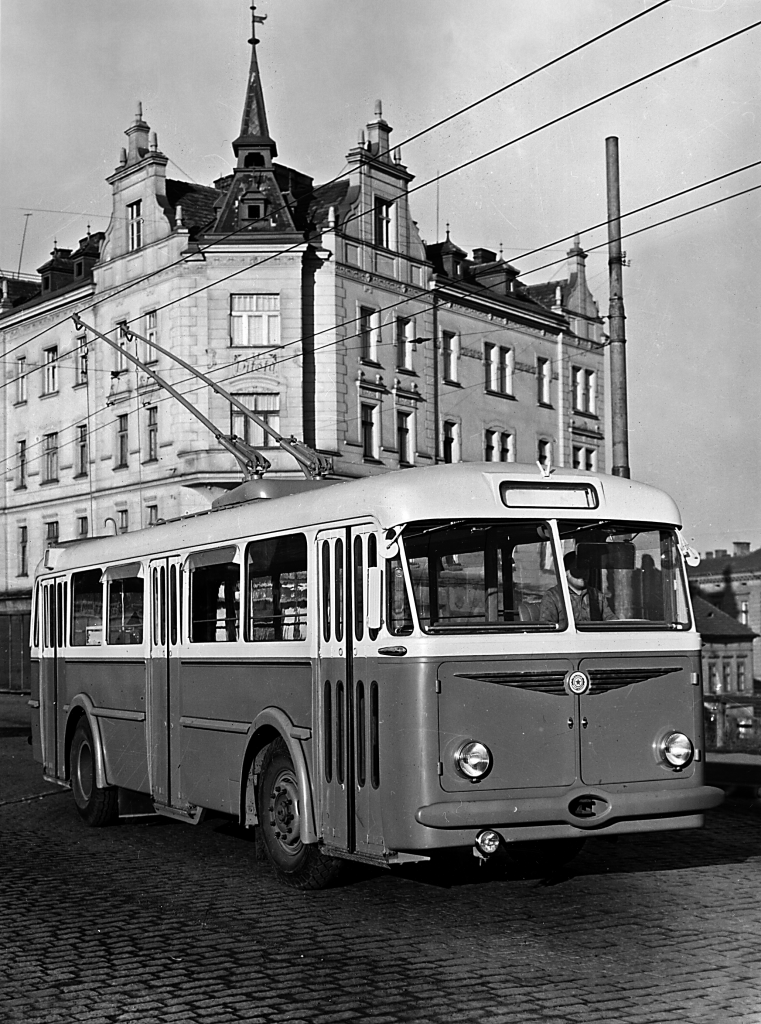
1951 – Production of the ŠKODA 7 Tr trolleybus starts, which was exported to Poland, for example.
1951
1953 – The first prototype of ŠKODA’s E 499 series DC electric locomotive is manufactured, and the production of large horizontal lathes begins.
1961 – ŠKODA wins the largest export contract in history – the construction of a metallurgical plant in India. In the late sixties, ŠKODA became the general supplier of nuclear power plants. For example, the company supplied the engine room of the A1 Jaslovské Buhunice nuclear power plant. It maintained its position as an engineering giant, but its products mostly traveled to the markets of the Eastern bloc and developing countries.
1961 – Production of the successful 9 Tr trolleybus began, which was exported to many countries such as Afghanistan, Azerbaijan, Armenia, Bulgaria, Georgia, India, Estonia, Latvia, Lithuania, Norway, Germany, Poland, Slovakia and Ukraine.
1961
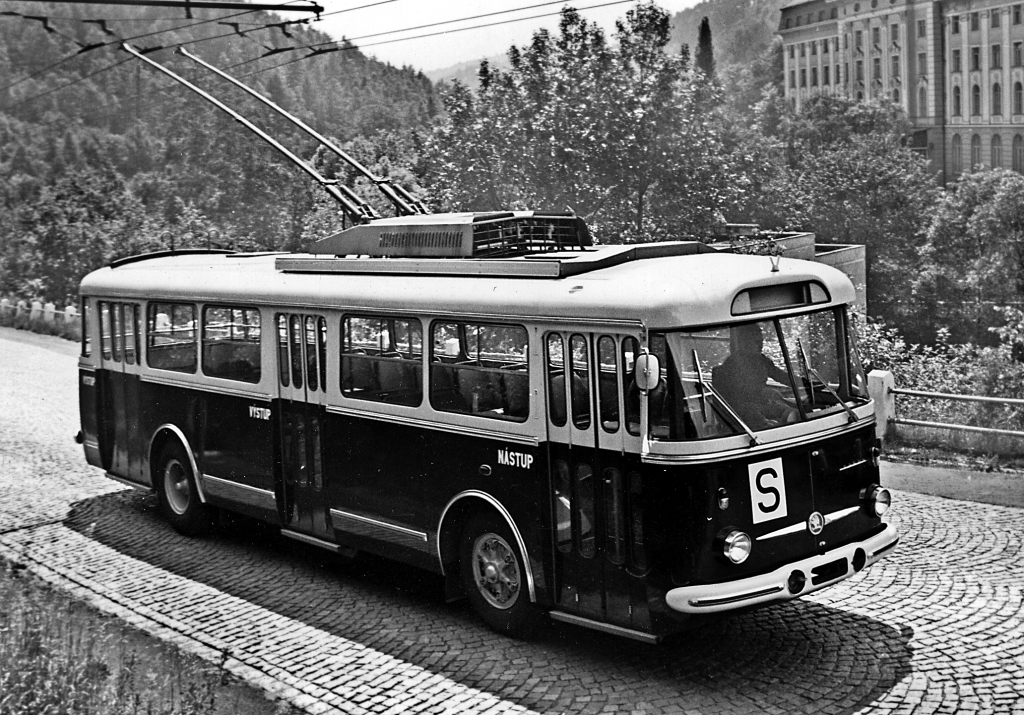
1972 – A prototype of the popular ŠKODA 14 Tr trolleybus is made, which is operated in Germany, Hungary, Georgia, China, Lithuania and Ukraine, in addition to Czech cities.
1975 – Delivery of a 125 MW ŠKODA power plant to Igarapé, Brazil.
1975
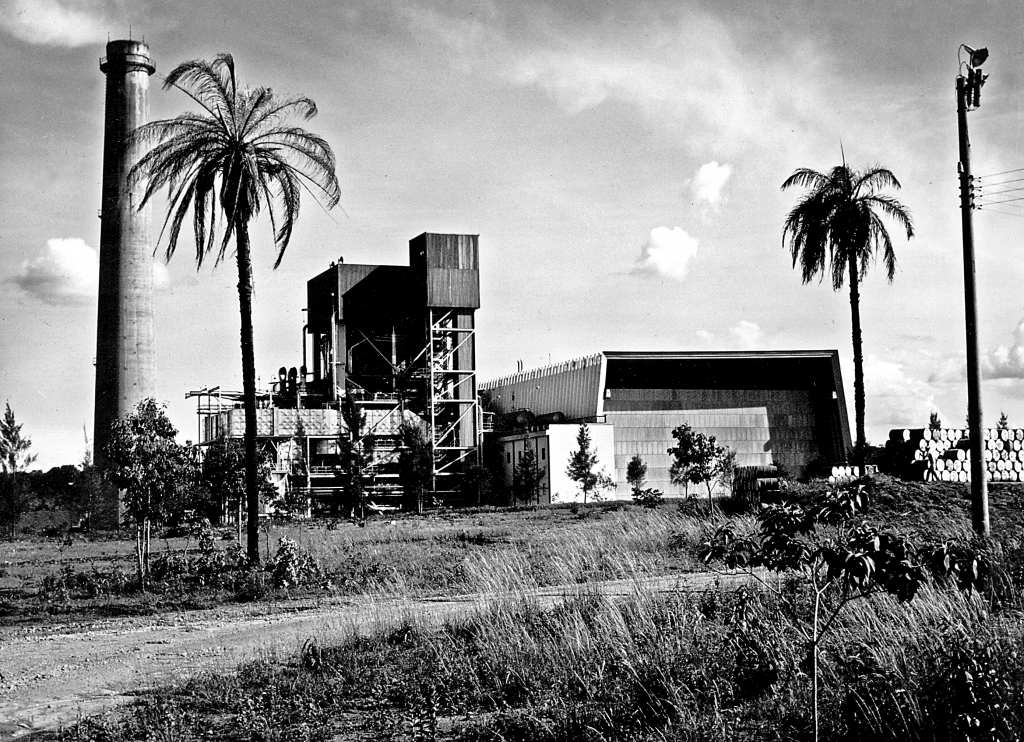
1977 – Delivery of the Abu Dhabi power plant engine room.
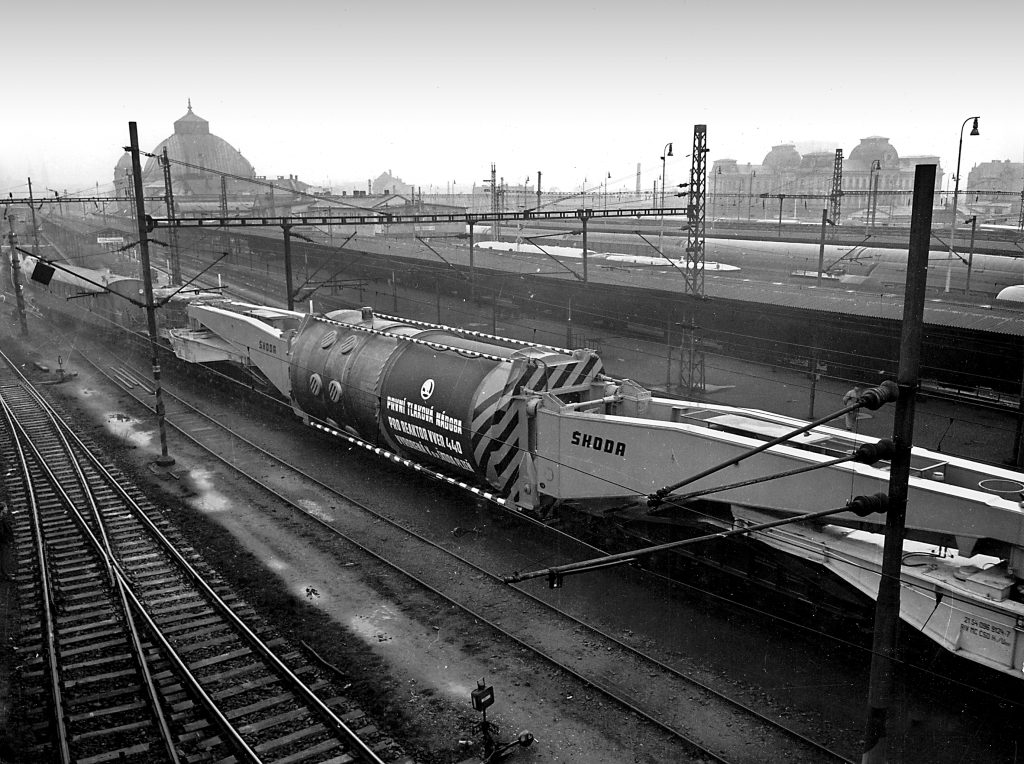
1980 – Production of the second pressure vessel of the VVER 440 reactor for the Jaslovské Bohunice NPP (the first one was for the Hungarian Paks power plant).
1980
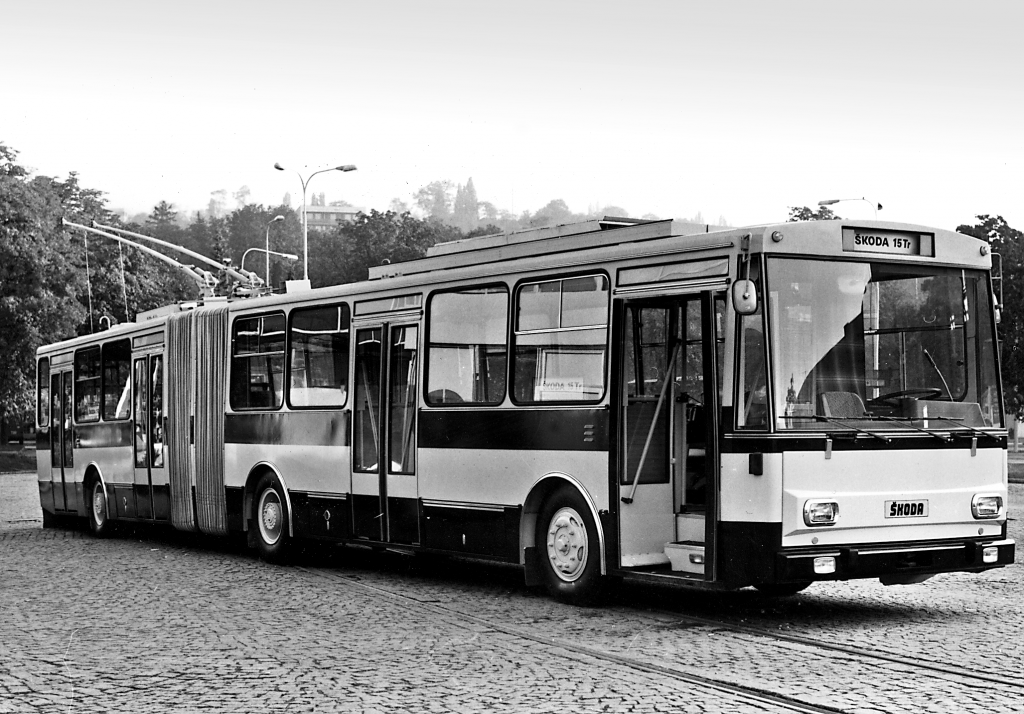
1983 – Production of a prototype of articulated trolleybus ŠKODA 15 Tr, which was later produced for the domestic market as well as for export to Estonia, Latvia, Lithuania, Hungary and Ukraine.
1983
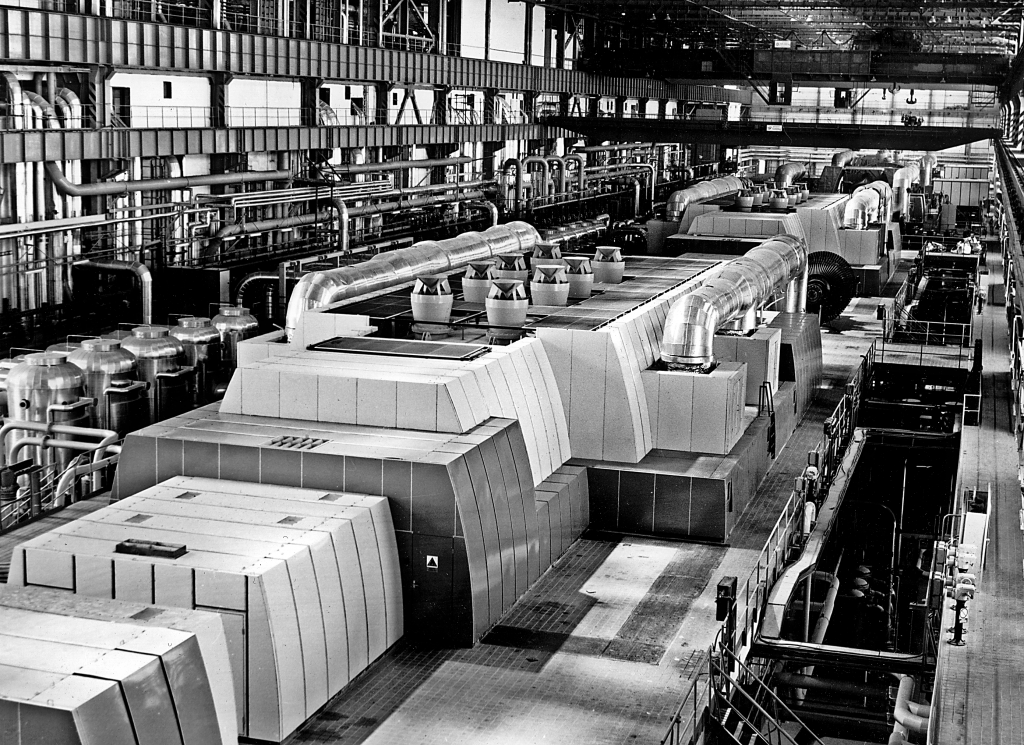
1986 – Delivery of 220 MW turbomachinery for the Dukovany NPP engine room.
1986
1989 – After the collapse of the Eastern bloc, ŠKODA ran into familiar difficulties – it lost established markets. In direct competition with Western companies in market conditions, it defended its position.
1990 – Establishment of the joint-stock company ŠKODA, concern, Pilsen
1993 – ŠKODA was privatised the “Czech way”: in the case of ŠKODA, this involved a private company and the two largest banks at the time. Already disparate, complex and not in good financial shape, the company began massive expansion into other sectors (e.g. trucks, beverage cans) with the help of bank loans. This significantly disrupted its financial stability. If it wanted to survive without following the fate of many other formerly famous Czech brands, it had to resort to radical treatment. The extensive production programme had to be reduced, and the company underwent complex restructuring.
2000 – ŠKODA HOLDING a.s. was established
2003 – Appian Group became its owner. ŠKODA decided to only maintain and develop the energy and transport engineering sectors. In these fields, the company managed to grow and confirm its position as a traditional Czech company with a strong position in the domestic and global markets in the field of energy and transport engineering.
2018 – The ŠKODA group, including ŠKODA INVESTMENT a.s., was taken over by PPF Group.


